The appeal of selling digital things is hard to resist. With the right digital product ideas, you can design something once, and it can keep generating income for months – sometimes years – without you having to do a thing for each and every transaction. No inventory, no shipping, no warehouse. Only a file and a payment processor.
But the actual question most people get hung up on is not whether to sell digital things. It’s how you sell. If you’ve been hanging around the concept but not quite committing, this guide on digital products ideas will help you find the appropriate fit for your abilities, your audience, and your ambitions.
Let’s do it!
Digital Product Ideas for Writers & Educators
Digital products are a treasure for writers and educators. If you can explain something simply or tell a tale well, there is an audience that will pay for it.
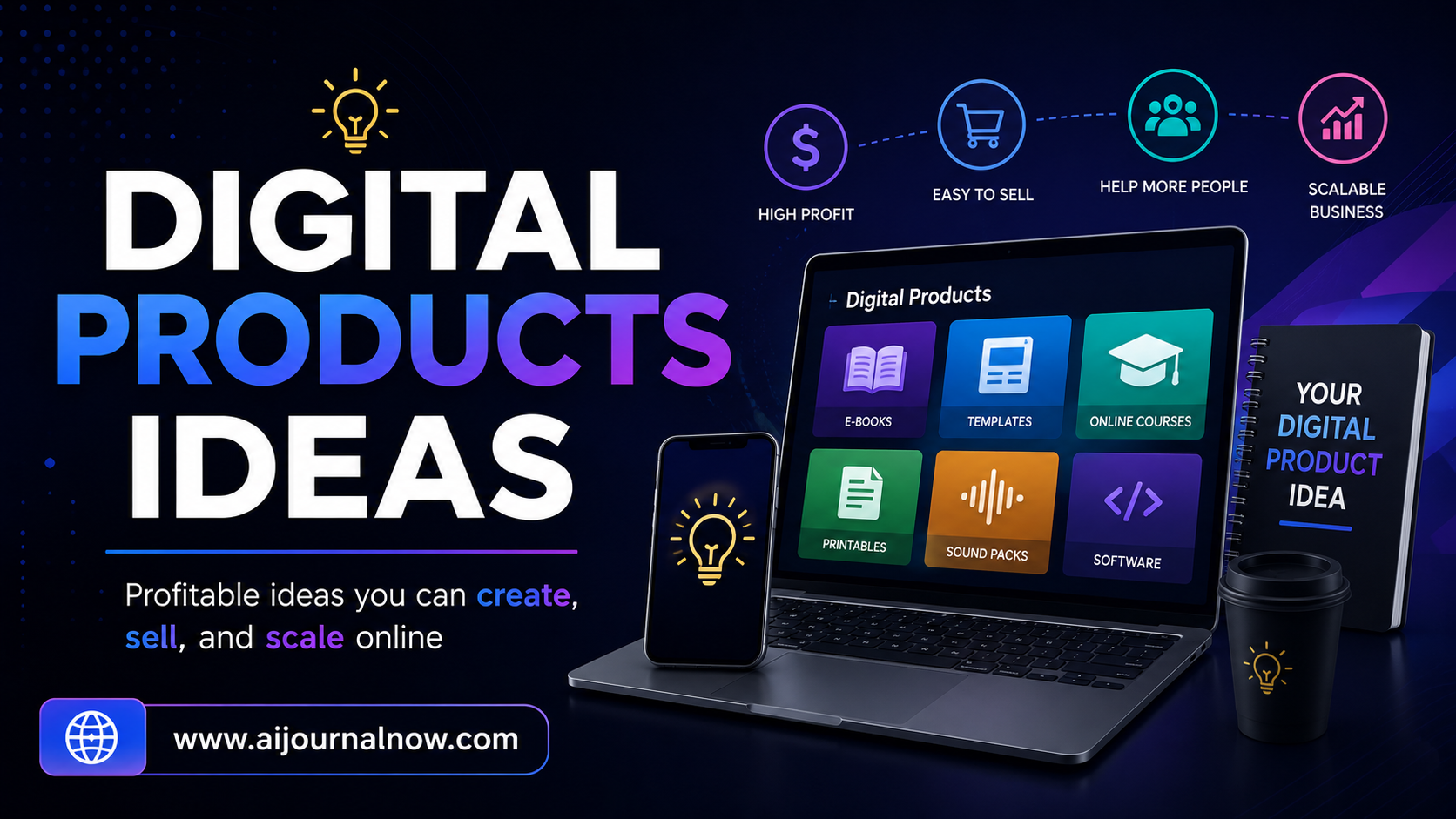
eBooks & How-To Guides
This is one of the most timeless digital product ideas out there, and still one of the most effective. An ebook doesn’t have to be 300 pages. A laser focused, highly researched 30 page guide on a certain subject can sell for $15-$40 and convert like crazy.
Think about what people ask you again and over again. A personal finance blogger who is asked all the time “How do I actually start budgeting?” may make that answer into a beginner budgeting booklet. A fitness coach might gather their most popular client recommendations into a downloadable meal prep guide.
The key is to be explicit. Too broad a topic. “Guide to investing”People will really seek for and buy a beginner’s guide to investing your first $1000 in index funds.
Online Courses & Minicourses
Online courses have a higher ceiling price than most other digital product ideas. A well-constructed course can sell for anywhere from $97 to $500 or more. Even a short, concentrated mini-course (2-4 hours of content) can sell for $49-$99 if it answers a real need.
Platforms like Teachable, Podia and Gumroad make it rather simple to host and sell courses without the technical difficulties. A graphic designer could teach the basics of Canva. A marketer may construct a course around how to write converting email sequences. A language instructor could advertise a beginner’s grammar course to a particular group.
Best-selling courses are not usually the most thorough. They are the ones that assist someone attain a specified objective as efficiently as feasible.
Tips For Designers And Creatives To Make Digital Products Ideas
Designers are inherently favoured in the digital product domain. Years of experience can be bundled into products that sell while you sleep.
Templates & Presets
Templates are a continually popular digital product idea across different niches. There’s a huge and consistent need for Canva templates, PowerPoint decks, resume templates, social media post templates, Notion dashboards, email newsletter layouts and more.
For example, a social media manager can make a pack of 30 Instagram post templates for a certain market and sell it for $25–$50. A photographer might sell Lightroom presets — colour grading settings that give photographs a specific style with one click — for $20 to $60 a pack.
Templates are a very strong offering since the value is instantly apparent to purchasers. No imagination is needed – they can see exactly what they are getting.
Printables and Planner
Don’t dismiss the printable market. Budget planners, habit trackers, meal planning sheets, wedding checklists, classroom tools – people purchase and download these all the time on platforms like Etsy and Gumroad.
A student or teacher could make a set of study planner printouts. A home organization blogger might make a weekly cleaning routine. You can build these products with Canva in a matter of hours and sell them forever.
Digital product ideas for marketers & business owners
If you have marketing experience or business understanding, you’re in one of the best places to sell digital items – since the individuals who buy from you often have money to spend and a clear problem to solve.
Swipe Files and Content You Can Use Today
Swipe files are great digital product ideas for busy marketers and business owners who desire inspiration or shortcuts. They are compilations of high-performing ad text, email subject lines, social media captions, or sales page frameworks.
A copywriter may sell a swipe file with 100 email subject lines that get opened for $19. A content developer may sell a box of 365 pre-written social media captions for a specific niche. Building the product needs considerable knowledge, yet once made, it is absolutely passive.
Spreadsheets and Calculators
A smartly constructed spreadsheet can be a real plus. Business owners have purchased templates for financial planning, project tracking, content calendars, invoice tracking and client reporting from Excel and Google Sheets.
If you’re good with spreadsheets, a tidy, effective financial tracker or social media analytics dashboard can be sold for $15-50, and requires almost no maintenance.
Also Read : Nectar AI Review: Everything You Need to Know
How to Pick the Best Digital Product Ideas for Yourself
With so many digital product ideas to hand, the hardest part is frequently simply choosing one. A few questions to help narrow it down:
What are people already asking you to help them with? Real demand trumps speculation, every time.
What’s your quickest way to create? A writer would probably have better luck trying an ebook rather than a course. Designers should begin with templates when designing a membership site.
Where is your audience shopping already? Etsy is a place for crafters to shop. Gumroad / Lemon Squeezy is perused by a business audience. Match the audience with the product and platform.
Begin small. One product that really addresses a problem is worth more than 10 half-baked ideas.
Final Thoughts
The range of digital product ideas available to producers in 2026 is intriguing. Whether you’re a writer, designer, teacher, or company owner, there’s a product format that plays to your strengths—and an audience waiting for exactly what you have to offer.
Your initial product doesn’t need to be perfect. It just has to be useful. And specific. And fairly priced. Start there, listen to what your buyers are telling you and grow from that base.
The best digital product you ever sell is the one you actually finish.
Questions and Answers
Q1: Which digital products concepts are best for beginners and easy to start with?
Printables and templates are always the quickest to set up and the cheapest to get started with. You may create a set of planner pages or social media templates in Canva and be ready to sell them within a day or two. Ebooks are another good alternative if you are comfortable authoring.
Q2: How much money can I actually make selling digital products?
It depends on your audience size, product cost and how aggressive you are with marketing. Earnings vary tremendously. Some creators make a few hundred dollars a month off a little Etsy shop. Or they establish six-figure businesses around a single flagship course. If you have a tiny audience already, a realistic estimate to start with could be $200-$1,000 within the first few months, and then it can expand from there with consistency.
Q3: Do you need a large following to be successful selling digital products? No, not at all. A small yet engaged audience in a speciality market can do better than a huge broad audience A mailing list of 500 well focused members can create more sales than 50,000 random followers on social media. Build trust with the appropriate individuals, don’t merely chase follower figures.
Q4: What are the greatest platforms to offer digital products?
That depends on your product and your audience. Etsy is a good place for printables and unique templates. Gumroad and Payhip are popular for ebooks, swipe files and mixed items. Made for courses: Podia and Teachable. Lemon Squeezy is good for software and tools. Most creators begin on one platform, then extend once they realise what works.
Q5: How can I prevent people from sharing my digital products for free?
It’s hard to protect it fully because anyone can technically share a file they download. Some practical solutions include watermarking PDFs, employing delivery platforms that limit downloads, and establishing your brand so strong that people choose to buy straight from you. Piracy is a much lesser concern than most authors fear, particularly in the early phases.