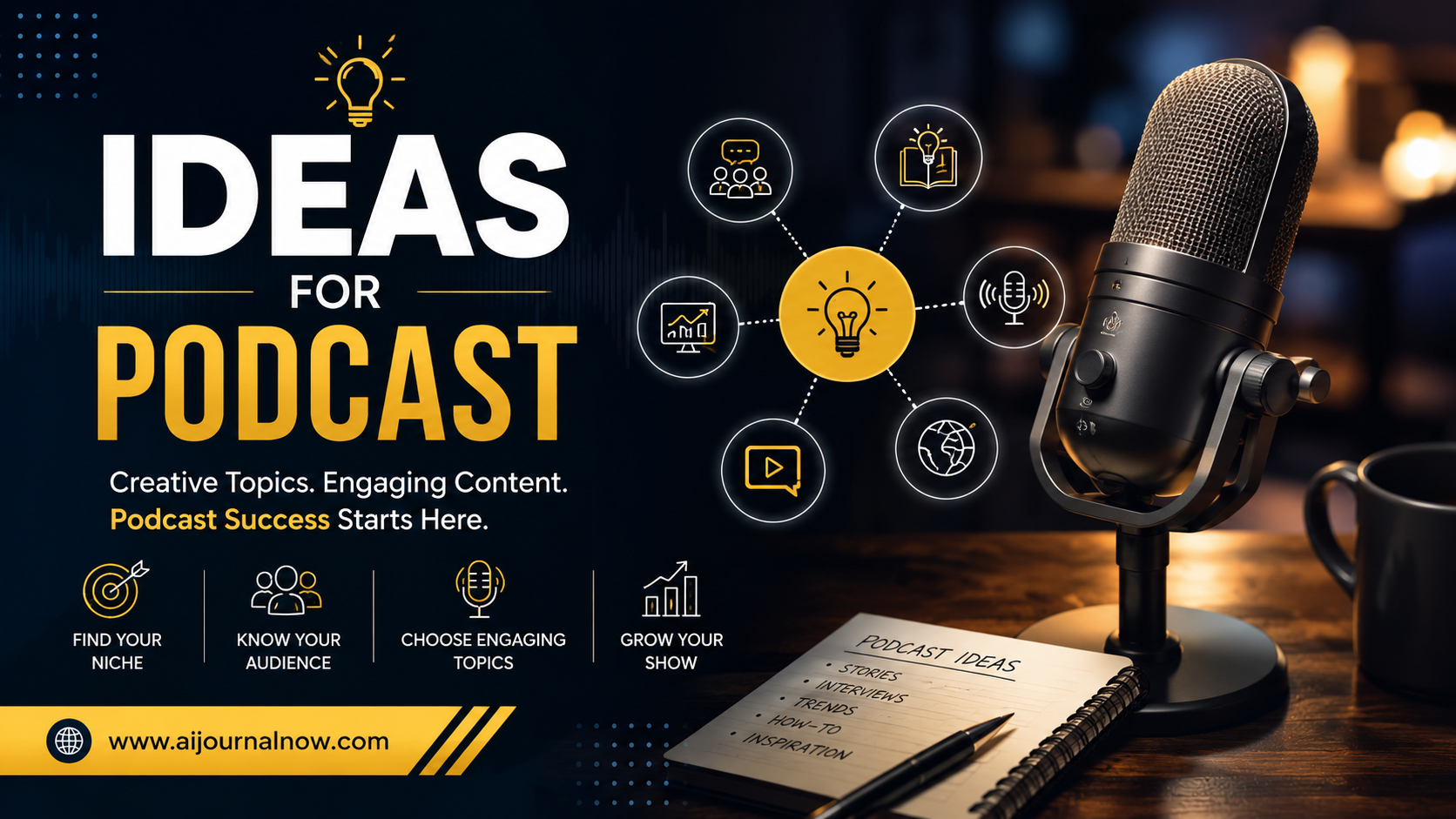
So you’ve been thinking about launching a podcast. Maybe you’ve downloaded a recording app or even bought yourself a microphone. Then you sat down, hit record… and nothing happened. That blank moment is actually where the best ideas for podcast content are born — in the silence, in the questions you can’t stop asking, in the stories only you can tell.
That empty feeling is more prevalent than you believe. The good news? If you stop overthinking it and start thinking of it as a conversation, it’s a lot easier to come up with good podcast ideas. In this post, we’ll cover some really good podcast ideas — broken down by kind — so you can choose the one that really suits your personality and hobbies.
So let’s get into it.
Why Choosing a Good Podcast Idea Matters
It helps to understand why the notion matters so much before you pick a topic. A podcast isn’t just a recording, it’s a relationship with your listeners. The best shows are like sitting across from a friend who knows his shit.
If you choose a subject that you find boring, your audience will sense it. But if you pick a topic you’re genuinely excited to talk about, even if it’s a bit esoteric, the excitement in your voice will have listeners wanting more.
Podcast Ideas: Pick Your Category First
1. Ideas For Podcasts From Life
Most Underrated Category Stories from real life strike a chord on a very personal level. Think about it, shows like My Favourite Murder went nuts because two buddies just sat around and were honest about their common obsession.
You don’t need a big life story. A podcast about being a first generation college student, or negotiating a career move or even managing a tight budget as a young father can resonate with thousands of people going through the same thing.
Example: A 28-year-old Pakistani teacher began a podcast about the challenges of being in the classroom and balancing work and life. Within six months she had followers on three continents.
2. Educational & How To Content Podcast Ideas
People want to learn, but not necessarily by reading a textbook. This is where the instructional podcasts come in.
Here are several solid angles:
- Teach a skill, e.g. “how to negotiate a salary” or “how to write a cold email” per episode
- Break down complex subjects like taxes, immigration or investing in simple terms
- Interview experts, explain information for daily listeners
If you’re a student, marketer, blogger or business owner, you have knowledge to share. The goal is to turn it into a chat, not a lecture.
3. Podcast Interview Topics
Interviews are timeless. They work for practically every niche you can think of. Whether you’re talking to startup founders, local artists, single parents, or people who’ve overcome something difficult,
“The secret to a great interview podcast? Ask more questions. Anyone can ask “what inspired you?” but the beauty is in the follow-up: “Wait, you said you almost quit, what stopped you?”
Tip: You can interview people who are not celebrities. In fact, “everyday expert” podcasts—where you’re talking to teachers, nurses, chefs, mechanics—often feel more authentic and trustworthy than the big-name shows.
4. Story & Narrative Podcast Ideas
They are more effortful but the pay off is great. Narrative podcasts tell a tale, in one episode or many, kind of like an audio documentary.
You may address:
- A local historical event that few people know about
- A personal anecdote (either your own or someone else’s)
- An examination of a weird mystery or unsolved story in your neighbourhood
Shows like Serial put this format on the map, but you don’t need a big production budget. A good tale and a clear structure can carry the whole thing.
Read Also: Gumroad Alternatives: Best Platforms to Sell Digital Products
Podcast Niche Community Ideas
The fastest rising podcasts aren’t broad. They’re specialised. They talk directly to a very niche group of people.
Think:
Pakistani freelancer’s podcast to make global markets accessible
- A competition for home bakers who want to transform their passion into a company.
- Weekly talks for persons learning English as a second language
When you talk directly to an audience, they feel seen – and that feeling creates fierce loyalty.
How to Validate Your Podcast Idea Before You Launch
If you get an idea of what you want, try it out before you decide on it. Here is an easy way:
- Google your topic to see what’s already out there. Competition is not a negative thing, it just shows there is an audience.
- Ask 5 people if they’d listen to your show. Not ‘is this any good?’ but ‘would you truly listen?
- Create and review a pilot episode Is it holding your interest?
This saves a lot of wasted work.
How to Make Any Podcast Idea Work with You
- Choose a format and stay with it — solo, co-host or interview. Trust is built on consistency.
- Stay on topic for episodes – rambles lose listeners fast. One primary topic per episode is plenty.
- Start with 10 scheduled episodes – so you don’t scramble for content after week two.
- Use real examples and stories – abstract counsel is meaningless. Some stories haunt you.
FAQ: Ideas for podcast
Q: What if my ideas for podcast is already out there?
B: Actually, that’s good news. If someone else is doing it, there is an audience. Your responsibility is to bring your angle or voice or particular audience to the table.” No need to recreate the wheel, just make it yours.
Q: Do I have to be an expert to start a podcast?
A: No. Some of the greatest podcast hosts are learners, not specialists. A “learning in public” model – where you learn things along with your audience – can be quite interesting. Authenticity almost always trumps expertise.
Q: How many ideas should I come up with for a podcast before choosing one?
A: At least 10-15 ideas before you start narrowing down. The first ones are typically evident. The fascinating ones are the ones that come after you get past the easy replies. Write them all down and then pick the one you’d be happy discussing 100 episodes from now.
Q: How long should a podcast episode be?
A: As long as it takes. No more. Interview shows usually run 30-60 minutes. Individual instructional shows might be as brief as 10 to 15 minutes. A good rule of thumb is to cut everything that doesn’t provide value to your listener.
Wrap-up
You don’t need a studio, a recognised name or a completely polished idea to get started. All you need is a subject you care about, a style that suits you, and a desire to hit record.
No matter what you decide, whether it’s intensely personal, educational, story-driven or community-focused, the finest podcast ideas are the ones that come from a real place. Begin there and the rest usually follows.
Choose your idea, plan the first 3 episodes and start recording. You have a voice.