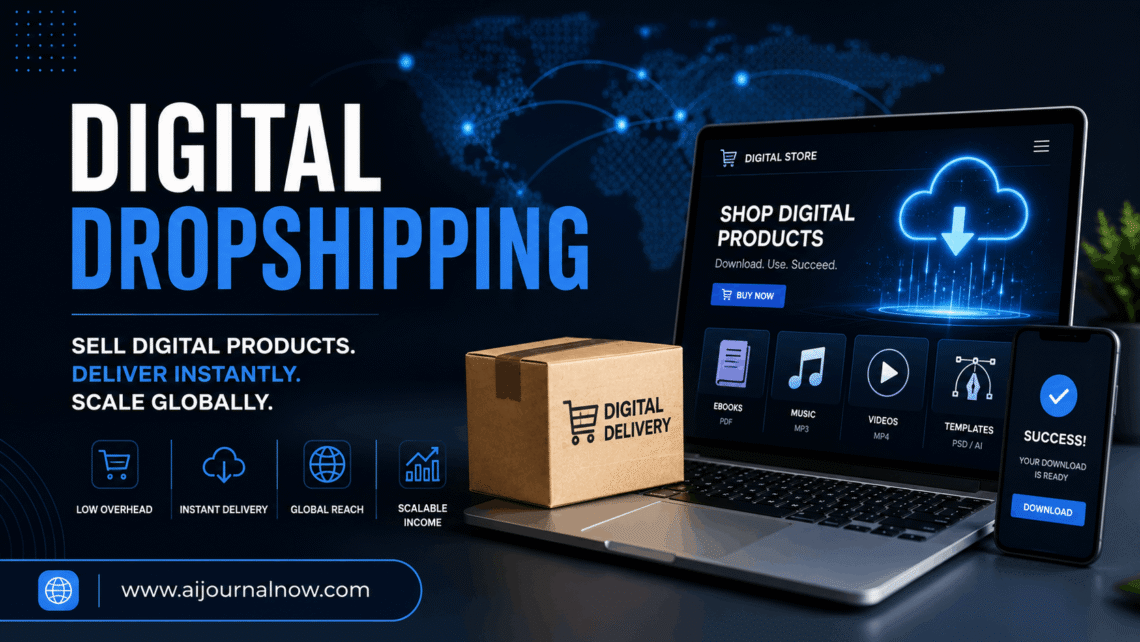
Digital dropshipping is altering the way ordinary people may start internet companies, and it’s easier than most people assume. No product touching No renting a warehouse No delivery delays like traditional retail. You just connect buyers and sellers and take a cut. It is simple in idea and powerful in implementation.
But it’s more complicated than most YouTube videos suggest. So, let’s clarify everything.
What is digital dropshipping?
Digital dropshipping is a form of business concept that lets you sell things online without ever having to stock them yourself. When a consumer orders from your store, you send that order to a third-party provider who ships directly to your customer.
You’re kind of the intermediary man. But one that makes a profit.
What separates digital dropshipping from traditional forms of dropshipping is the underlying infrastructure. Platforms like Shopify, WooCommerce and DSers automate most of the process now. You can operate a whole business from your laptop – no workers, no warehouse leasing, no upfront product investment.
How does digital dropshipping work?
So, here’s the fundamental flow:
1. You create an internet store
2. You list products from vendors (AliExpress, Spocket, Zendrop, etc.).
3. Someone purchases something from your store at your quoted pricing
4. You get the item from your source for a cheaper price
5. The supplier ships straight to your consumer.
6. Make money on the spread
The provider takes care of the full fulfilment procedure. Your role is sales, customer service, and developing a shopfront that people trust. That is where the real work happens. That is where most beginners underestimate the job.
Digital Dropshipping: Key Benefits
Startup Costs are low
You don’t need thousands of dollars to get started. You can get started for under $100 with a simple Shopify subscription, a domain name and a few products. That’s a big plus for students, freelancers or anyone dabbling in a side hustle.
Choose Your Own Location
Digital dropshipping can be done from anyplace you have an internet connection. Many successful dropshippers manage their entire business while travelling or working remotely. Your store is open 24/7 without you behind the counter.
Scalable without the usual pain
In a traditional retail environment, greater sales imply more staff and more goods. The scaling in digital dropshipping is typically about growing your marketing spend or increasing your product catalogue, not redesigning your complete setup.
Wide range of products
Because you’re not buying the inventory up front, you can test dozens of products fast. This flexibility allows you to test winning items without any financial risk.
What to Know
Narrow profit margins
This is the most missed truth of digital dropshipping. “If prices are available to all suppliers, then competition will drive the price down. After you pay for marketing, platform fees, and processing charges, your actual profit per order can be shockingly low.
No Control of Fulfilment
Shipping delays, damaged items, and incorrect items shipped are your supplier’s fault, but they become your customer’s problem. You will often face maddening situations that were never in your control in the first place.
Niches with Saturation = high competition.
Generic dropshipping shops that are selling the same trending products as thousands of other stores can’t stand out. To be seen, you must establish solid branding, define your audience, and maintain consistent marketing. Things that take real time to establish.
Who Is Digital Dropshipping For?
Digital dropshipping is not one size fits all, yet it actually works effectively for:
Bloggers and content creators who have an audience and wish to monetise without building their own products
Marketers and freelancers who know paid ads and can drive targeted traffic
Students and side hustlers wanting an easy start into e-commerce with not much risk
Small business owners wanting to diversify product lines without inventory risk
The common denominator? People who are prepared to treat it like a real business and not a passive income machine.
Tips for Doing Digital Dropshipping
Niche down early. Selling ‘everything’ to everyone rarely works. Target a specific audience and serve them properly.
Vet your suppliers thoroughly. Order samples before listing products. Customer experience is built on supplier reliability.
Get branded. People will trust a professional logo, a clean store and a consistent tone faster than any ad will.
Focus on marketing. 99% of the dropshipping companies that fail don’t fail because of the products – they fail because nobody knew the store existed.
Review your numbers weekly. Know your ad expenditure, cost per acquisition, and net margin.
Conclusion
Digital dropshipping is a viable, flexible business concept that pays well for those taking it seriously. Competition is real; the barrier of entry is low. Successful digital dropshippers aren’t only lucky or riding the coattails of a hot product trend. It’s persistence. It is positioning. It’s a desire to learn from each campaign.
Start small, test often, and construct something that’s worth coming back to.
FAQ: Dropshipping Digitally
Q1: How much money can I realistically make doing digital dropshipping?
Income varies dramatically. Beginners make $500-$2,000/month after 3-6 months of steady work. Experienced dropshippers can make a lot more, but it really comes down to niche, marketing competence and product selection.
Q2: Do I have to get a company license to start digital dropshipping?
Requirements differ from country to region. In many regions you can start as a single proprietor with no official registration, but it is sensible to talk to a local business advisor as you develop.
Q3. Is dropshipping still lucrative in 2026?
Yes – but the days of taking a hot product and making immediate money are pretty much over. The profits today are in branding, in emphasis on a niche, and in creating real relationships with customers.
Q4: What is the biggest error beginners make in digital dropshipping?
Marketing is undervalued. A lot of new dropshippers set up a store and wait for customers who never come. The real task is driving traffic, whether it be through SEO, paid ads or social media.
Q5: Can I do digital dropshipping without paid ads?
Absolutely. Traffic techniques that don’t cost money, such as SEO-driven blogs, Pinterest traffic, TikTok organic content, and influencer collaborations.
Read Also: How a Newsletter Story Can Help You Connect With Your Audience