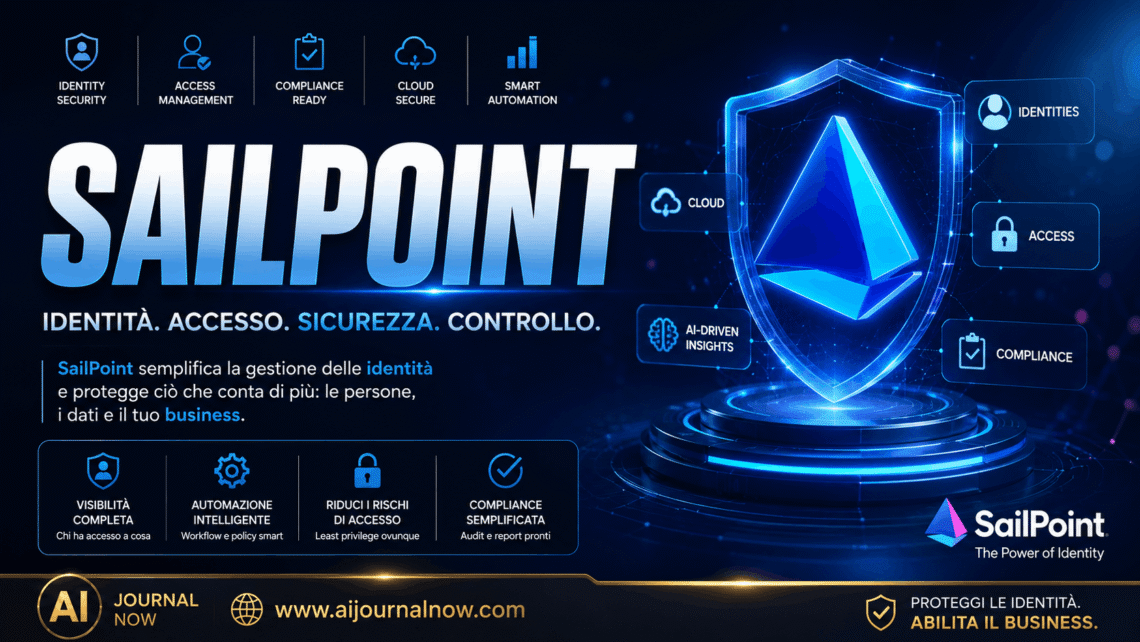
Think it’s easy to control who can access what inside a company? Try doing it when you have thousands of workers, contractors, cloud apps, and legacy systems all at once. That’s where SailPoint comes in. It’s an open platform to handle one of the most neglected yet crucial issues in enterprise IT: identity governance.
If you’ve ever wondered how huge enterprises manage user permissions, prevent unwanted access, or comply with requirements like GDPR or HIPAA, SailPoint is a key part of the answer. Let’s break it down in layman’s terms.
What is SailPoint? Why do we need SailPoint?
SailPoint is an identity security technology that helps enterprises manage, control, and secure digital identities throughout the enterprise. It’s like a central control tower that watches and controls who can access which systems, applications and data—and whether they should get in.
Founded in 2005, the platform has become one of the most recognizable names in the Identity Governance and Administration (IGA) industry. It supports enterprises in sectors such as healthcare, banking, manufacturing, and government.
The underlying problem that SailPoint solves is simple yet big. As a firm grows, so does its web of users’ accounts, permissions, and roles. Without such a system, people have access they don’t need anymore. Active credentials may still exist for former employees. An accountant might mistakenly have admin access to a dev server. These gaps are huge security dangers — and SailPoint is here to solve them.
Understanding SailPoint: Core Mechanics
The magic of SailPoint is it hooks into all the systems and applications a company uses—whether that’s Active Directory, SAP, Salesforce, or AWS—and it creates a single view of every user’s identity and access permissions.
Discovering and Aggregating Identity
Step one is discovery. SailPoint collects data from all connected sources to develop a comprehensive picture of all identities within the company. This covers employees, contractors, bots, and service accounts. Once aggregated, you can truly see who has access to what, for the first time, often.
Access Certification and Reviews
SailPoint automates the periodic access review process. Managers are contacted to assess and confirm whether team members still need particular access. When someone no longer should have access to a system, it’s automatically marked or revoked. That alone saves hours and hours of laborious auditing.
Role administration
Instead of providing permissions one by one, SailPoint allows organizations to build roles—bundles of access privileges associated with job functions. New HR hire is assigned an HR job that automatically provisions access to the necessary technologies. No back and forth with IT. No waiting days for a helpdesk ticket.
Policy Enforcement and Separation of Duties
SailPoint applies controls that prohibit risky access combinations. For example, it can identify or block a situation where one person can generate and authorize financial transactions—a classic segregation of duties breach that auditors search for.
Why use SailPoint?
There must be a good financial case for organizations to use enterprise software. They don’t do it for fun. SailPoint’s advantages are concrete and actionable.
- Less Security Risk: SailPoint minimizes the attack surface considerably by continuously checking access privileges and alerting to irregularities. Orphaned accounts and over-privileged users are discovered early, before they become a liability.
- Regulation Compliance: For companies in regulated industries, SailPoint makes audit prep a lot less difficult. It creates precise reports on who had access to what, when, and why. Just what the auditors want to see.
- Operational Efficiency: IT effort is reduced by automating provisioning and deprovisioning. If someone joins, changes roles, or quits, SailPoint manages the access changes automatically. HR and IT teams spend less time on manual tickets.
- Improved visibility: If you can’t see it, you can’t protect it. SailPoint’s simple, searchable view of all identities and entitlements. The visibility itself is revolutionary for firms that used to manage access in Excel spreadsheets.
Real-World Use Cases of SailPoint in Action
Once you know what SailPoint does in real business operations, you will understand its worth better.
- Large Enterprises with Complex IT Environments: A worldwide bank, with 50,000 workers, dozens of business units, and hundreds of applications, wants to know exactly who has access to key financial data. SailPoint enables that oversight without requiring a small army of IT staff to do it manually.
- Healthcare Organizations Protecting Patient Data: Hospitals are required to comply with HIPAA, and only authorized workers should have access to patient records. SailPoint enforces such limitations yet allows clinicians to acquire the access they need quickly—without jeopardizing compliance.
- Companies Undergoing Mergers and Acquisitions: There is typically confusion about identity when two organizations unite. SailPoint helps standardize and manage the unified identity environment, so you’ll have well-defined access restrictions from day one.
- Remote and Hybrid Workforces: Perimeter-based security is no longer enough when your staff are working from everywhere and using cloud apps all the time. It manages identities no matter where users are or what devices they are using.
SailPoint Product Lines: Existing Products
SailPoint has a few products that are all part of its platform umbrella, each of which deals with a distinct angle of identity security.
IdentityNow (SailPoint)
This is the SaaS version of the platform, offered as cloud-native. It is meant for enterprises that wish to launch quickly and automatically upgrade and scale without managing infrastructure. IdentityNow covers access certificates, provisioning, password management, and analytics.
IdentityIQ by SailPoint
The on-premise version, IdentityIQ, is highly customizable and generally favored by enterprises with complicated infrastructures or strict data residency needs. Deployment is more resource-expensive, but you have greater granular control.
SailPoint Identity Security Cloud
A newer development of the platform leverages AI and machine learning to make smart suggestions, detect access irregularities, and anticipate risky activity before it leads to a breach.
Things You Should Know About Limitations of SailPoint
No platform is flawless, and SailPoint is no exception. Here are some honest thoughts.
- Implementation Complexity: SailPoint deployment, with IdentityIQ, can be a long and complex project. Often organizations that do not have experienced identification professionals on staff require consultants from outside.
- Cost: SailPoint is an enterprise-grade platform with an enterprise-grade price tag. It’s not targeted for small enterprises and can involve a large investment in licenses, implementation, and continuing support.
- Learning Curve: It is a bit difficult to understand for end users and administrators. Successful rollout requires training and change management.
- Effort of Integration: SailPoint has hundreds of connectors, but connecting with bespoke or legacy systems can take a fair bit of time and technical work.
Why SailPoint Matters For Identity Security Today
Cyber risks are evolving. No more perimeter. Users are all over. Data is spread across dozens of cloud environments. In this climate, identification has become the new security border—and it is one of the most established instruments for safeguarding it.
Organizations that consider identity governance an afterthought sometimes learn the hard way, through breaches, compliance failures, or complex audits. It changes that dynamic by making identity governance proactive, automated, and ongoing.
It provides a standardized and scalable method for security teams, IT directors, compliance officers, and even business stakeholders looking to lower risk to solve an issue that only becomes more difficult as enterprises develop.
Conclusion
SailPoint is not software—it is a strategic investment in understanding and controlling who has access to your most important systems and data. For a growing business or a large company managing thousands of identities in hybrid environments, it has the visibility, automation, and governance features you need to stay secure and compliant.
If identity security is on your radar—and it should be—SailPoint is worth knowing about in depth.
Frequently Asked Questions
Q1: What precisely does SailPoint do?
It is an identity governance platform that governs user access to company systems and apps. It automates provisioning, access reviews, role management, and policy enforcement to minimize security risk and ensure compliance.
Q2: Is SailPoint meant solely for big companies?
Yup, mostly. It is aiming at mid to large organizations with complicated IT environments. Identity management technologies for small firms tend to be simpler and less expensive and more suited to their needs.
Q3: How is SailPoint different from IAM tools like Okta or Azure AD?
Okta and Azure AD are mostly about authentication (who you are and how you log in), while SailPoint is about authorization governance—managing the access users have, validating that access on a regular basis, and enforcing policies. Many organizations utilize both in conjunction.
Q4: What is the time frame for SailPoint implementation?
Implementation timelines vary widely. A simple cloud deployment of Identity Now can take a few months, whereas a complete IdentityIQ implementation in a complicated environment can take a year or more. It’s all about good preparation and seasoned implementation partners.
Q5: Is SailPoint an AI?
Yes. SailPoint’s newer Identity Security A cloud platform uses AI and machine learning to provide access recommendations, spot anomalies, and help enterprises make smarter decisions about user entitlements by analyzing peer groups and behavior patterns.

