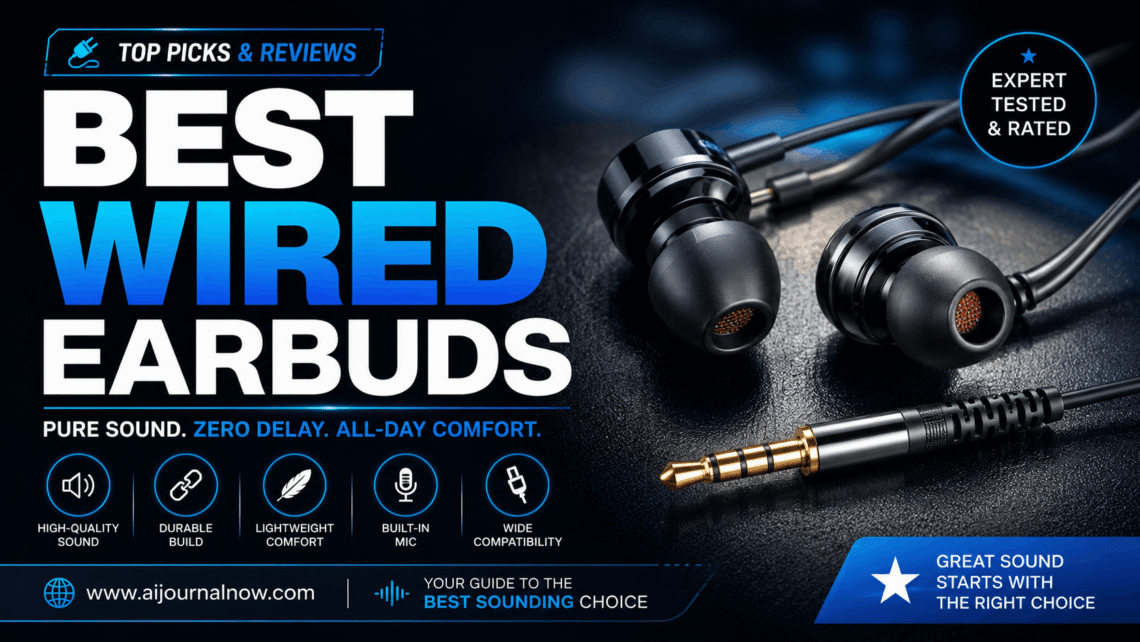
If you’re seeking the best wired earbuds, you’re not alone, and frankly, you’re making a smarter choice than most people realize. Wireless earphones receive all the marketing hype, but wired counterparts have been staging a serious comeback. They’re back on the celebs. Audiophiles never ceased. And regular listeners are realizing what they missed when they made the switch to Bluetooth.
The appeal is clear. No charge. No issues with pairing. and no diminishing battery after 18 months. And in many cases, considerably better sound—especially at the same price range. This guide explains what makes a great pair, who should buy what kind, and which specific models are worth your money right now.
Best Wired Earbuds: Are Wired Earbuds Still A Thing in 2027?
Before getting into specific recommendations, it’s worth knowing why the best wired earbuds still retain their position despite wireless competitors.
The main factor is audio quality. Bluetooth communication does compress music, and while the gap has closed with codecs such as aptX Lossless and LDAC, cable connections still provide uncompressed audio with zero processing overhead. For music listeners who care about such details as the texture of a guitar string or the space between instruments in a recording, that difference is perceptible.
Then there’s the latency factor. Wired earphones feature virtually no audio delay, which is huge for video editors, gamers, and anyone performing audio work. Even the greatest wireless earphones have delay. It’s normally inaudible for music, but for video or gaming it can be quite distracting.
And then there’s the reliability angle. No firmware update. No battery worries. You put them in and they work. That ease of use has actual practical relevance for students and professionals who use earphones all day long and for commuters.
Best Wired Earbuds: Our Top Picks For Every Budget
Skullcandy Set And Apple EarPods—Less Than $50
If you’re shopping on a budget, the Skullcandy Set is one of the best values out there. It connects via USB-C—handy if you’ve already lost your dongle—and produces genuinely solid bass response, due to a tight ear seal. A consistent, secure fit is not always found at this price point. It does the job well for casual listening on a commute or at work without asking you to think about it too much.
Apple EarPods (USB-C version) are still a great choice for iPhone or iPad users who merely want something that works without fuss. The sound is nice rather than stunning, but the mic quality is above average for the price, so they’re a good option for calls and voice memos.
$50–$150: Sennheiser IE 200 and Shure SE215
It’s in this mid-range where the best wired earbuds start to get very stunning. The Sennheiser IE 200 is priced around the $100 mark, and it punches far above its price. Sennheiser’s reputation for balanced, realistic sound reproduction is carried through here. The IE 200 offers audio with a level of clarity and staging that amazes most first-time listeners. Vocals are quite nice. It’s a strong pick for music fans that consume a wide variety of genres.
Another highlight in this category is the Shure SE215, especially if you’re after passive noise isolation rather than electronic noise cancellation. The over-ear cable routing takes a minute to get used to but produces a sturdy fit that works well during workouts or long listening sessions. The single balanced armature speaker produces detailed mid-range, which is well suited for acoustic music and podcasts, in particular.
$150 and Up: Shure SE425 PRO and Sennheiser IE 200
The Shure SE425 PRO is one of the most highly regarded names in the Best Wired Earbuds category for audiophiles and professionals. With two balanced armature drivers (one for highs, one for lows), it gives a level of separation and detail that dynamic drivers generally can’t at this size. It’s used by sound engineers. Musicians use it as in-ear monitoring on stage. If you are serious about audio and have the budget, it is worth every penny.
The Campfire Audio Iris and Juzear Defiant In-Ear Monitors are newer contenders making waves in the audiophile industry, giving a tuning that appeals to listeners who want more texture and warmth than the clinical accuracy of studio monitors. If you’ve outgrown the popular options, both are worth checking out.
The Best Wired Earbuds—A Guide to Connector Types
The connector dilemma is one item that screws up a lot of purchasers. The best wired earbuds come with three basic connector kinds, and which one you need relies on your device altogether.
The typical standard is the 3.5mm headphone jack. It plays nicely with most laptops, older Android phones, and desktop PCs. This is the most flexible option if your device includes a headphone port.
Lightning connectors are for older iPhones (iPhone 14 and older). That’s the format of the Apple EarPods, and they feature a built-in DAC, which is why they may sound quite great despite being Apple’s cheapest option.
The industry is going USB-C. Most current computers, newer iPhones (15 and after), and most Android flagships are USB-C. More of the best wired earbuds are shipping with USB-C as the primary connector now, and it has the advantage of potentially delivering better music through a higher-quality inbuilt DAC.
If your device doesn’t have the right port, you’ll need a dongle. Small inconvenience—but think about the price and trouble before you buy.
Best Wired Earbuds: What Type Should You Buy?
The best wired earbuds for a student are seldom the same as the best choice for a professional sound engineer, as various users have different needs.
If you’re a student or just a casual listener, the Sennheiser IE 200 or the Skullcandy Sesh are both good entry points depending on your budget. Both are of great value and need no special understanding to enjoy.
If you’re a freelancer or remote worker spending hours on calls, make sure you have a good microphone. Seek models with inbuilt controls and a clear directional mic. The Apple EarPods do a good job here, as do the Shure SE215 with their detachable cable system.
Content makers, video editors, and musicians should look at the Shure SE425 PRO or Sennheiser’s higher IE series. Here, perfect sound reproduction and zero latency are the priorities—not necessarily wireless convenience or bass emphasis.
One of the biggest advantages for gamers is the connected audio, which provides a zero-latency connection. All of the above mid-range solutions work well for PC gaming, but gamers with a dedicated soundcard or DAC/amp setup will get even more out of audiophile-tier options.
Things To Check Before You Buy Best Wired Earbuds
Besides the model name, there are a few practical considerations that are worth reviewing before you commit.
Type of driver is a factor. Dynamic drivers are widespread, cheap, and ideal for bass. Balanced armature drivers are more accurate and reproduce detail better but can sound thin to listeners accustomed to bass-heavy audio. Some luxury earbuds offer both.
The selection of the fit and tip is often neglected. And even the greatest wired earbuds might sound poor if they don’t seal correctly in your ear. Most good pairs come with numerous sizes of ear tips. If the tips offered don’t work for your ear shape, aftermarket foam tips from companies like Comply can make a big impact.
Cable quality and length might impact the day-to-day usability more than you might anticipate. You will get frustrated by a cable that tangles all the time or goes bad rapidly, no matter how fantastic the audio is. Braided cables have a longer life span. Shorter connections (~1.2 meters) are great for phone usage, while longer ones are good for desktop settings.
Wrap up
The best wired earbuds of 2026 will suit a range of needs and budgets. You want something reliable and cheap for your everyday commute? Or a step up for music you really love? Or pro-level audio for creative work? There’s a pair created for exactly that. The wireless revolution didn’t make wired unimportant; it made the discourse more intriguing.
Frequently Asked Questions
Q1: Are wired earphones better than wireless for sound quality?
If you compare directly at the same price range, absolutely. Wired earphones often give better audio because they send uncompressed music and do not have the overhead of Bluetooth processing. At very high price ranges, premium wireless earbuds can narrow the gap, but wired still has an edge for pure audio fidelity.
Q2: Will I need a dongle to utilize wired earbuds with a new phone?
Depends on your phone. No dongle is required if your device has a 3.5mm headphone jack. Most recent flagship Android phones and iPhones have done away with the headphone port, so you’ll need either a USB-C or Lightning pair or a little adapter dongle for regular 3.5mm earbuds.
Q3. What are the best cheap wired earbuds?
Both the Skullcandy Set (USB-C) and Apple EarPods are good budget choices for under $30. The Skullcandy Set is the better all-rounder for Android users, while the EarPods are the clear pick for iPhone users wanting something that just works with good call quality.
Q4: Are wired earphones good for gaming?
Yeah. Wired earphones have one major advantage over wireless: zero audio latency. It makes a substantial difference when gaming, especially for competitive gamers when audio timing matters. Any cable pair that connects to a 3.5mm port on a controller or PC works dependably without any drops in connection.
Q5: How long do wired earbuds last? How long do wireless earbuds last?
Wired earbuds can last far longer than wireless, with careful care. Wireless earbuds have rechargeable batteries in them, which degrade over the course of hundreds of charges—usually losing a noticeable amount of power after two to three years. Wired earphones don’t have batteries; therefore, their longevity is determined entirely by cable quality and physical maintenance.