Doubao-Seed-2.0-Pro is no longer ByteDance’s current flagship. Seed 2.1 Pro and Seed 2.1 Turbo launched on 24 June 2026 at the Volcano Engine FORCE conference. But 2.0 Pro is not a deprecated model you should avoid, and this is the part nobody explains: at $0.47 per million input tokens and…

AI Models & LLMs
-
-
Best Claude Alternative: It Depends Why You’re Leaving
There is no single best Claude alternative, and any article that names one without asking what you are trying to fix is guessing. The right answer depends entirely on which limit you hit: usage caps, missing real-time search, no image generation, ecosystem lock-in, regional availability, or price. Each of those…
-
GPT Nano: The Budget Tier Got 4x More Expensive
GPT nano is OpenAI’s smallest and cheapest model tier, built for classification, data extraction, ranking, and sub-agents rather than conversation. The current one carrying the name is GPT-5.4 nano, released 17 March 2026. Two things about it get almost no coverage. Its input pricing is exactly four times what GPT-5…
-
Qwen3.6 Plus Preview: Two Models, Both Superseded
Qwen3.6 Plus Preview is not one model. The name runs together two separate Alibaba releases: Qwen3.6-Plus, announced 2 April 2026, and Qwen3.6-Max-Preview, which arrived later that month as an early look at the tier above it. Both are now two generations behind. Alibaba’s current family is Qwen3.8, and the jump…
-
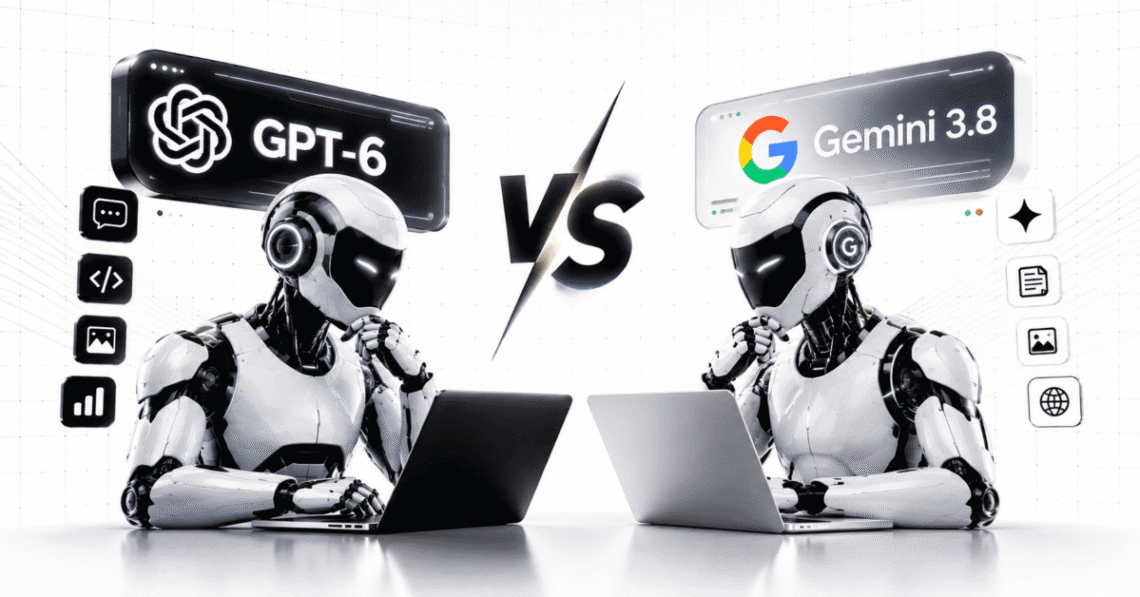
GPT-6 vs Gemini 3.8: Two Flagships, One Day Apart
Google released Gemini 3.8 Flash on 2 September 2026. OpenAI began rolling out GPT-6 Astra the following day. GPT-6 vs Gemini 3.8 Both are days old, both are vendor-benchmarked only, and no independent testing of either exists yet. The more useful thing to know before comparing them: tier names no…
-
GPT-4.1 vs DeepSeek V3 Hallucination Comparison: Who Is Best?
There is no honest single-number answer to whether GPT-4.1 vs DeepSeek V3 Hallucination Comparison. On Vectara’s current HHEM-2.3 benchmark for source-grounded summarization, GPT-4.1 has the lower measured hallucination rate: 5.6% versus 6.1% for the original DeepSeek-V3. That is a small advantage for GPT-4.1 under the same evaluation framework. But a…
-
Qwen3-235B-A22B vs GPT-OSS-120B: Which Is Better?
If you are choosing between Qwen3-235B-A22B vs GPT-OSS-120B, GPT-OSS-120B is the more practical default for many English-language reasoning, coding, and agentic deployments. It activates far fewer parameters per token, OpenAI says it can run on a single 80 GB GPU, and independent testing currently favors it over the original Qwen3-235B-A22B…
-
GLM-5.1 vs Claude Opus 4.6: Which Model Is Better?
If you are comparing GLM-5.1 vs Claude Opus 4.6, the decision is less about finding one universal winner and more about choosing between two different deployment philosophies. GLM-5.1 is the stronger value proposition for developers who want open weights, lower API costs, self-hosting options, and a model designed around long-running…
-
K2 Think V2 Explained: Specs, Benchmarks, and Limits
K2 Think is an open AI reasoning project developed by the Institute of Foundation Models at Mohamed bin Zayed University of Artificial Intelligence (MBZUAI). The current model, K2 Think V2, is a 70-billion-parameter reasoning model built on MBZUAI’s own K2-V2 foundation model. That makes the current K2 Think substantially different…
-
Gemma 4 vs GPT-OSS: Which Open Model Is Better?
If you are comparing Gemma vs GPT-OSS in 2026, the relevant Google generation is Gemma 4. Google released Gemma 4 on March 31, 2026, while OpenAI released the GPT-OSS family on August 5, 2025. Google currently offers Gemma 4 across several sizes, while OpenAI offers two main GPT-OSS models: gpt-oss-20b…