Articoolo no longer functions as an AI writing tool. The domain is still online. But it now hosts unrelated content about air conditioners, fan art, and betting sites. There is no product page, no pricing, and no sign-up option. This guide explains what happened, then covers real Articoolo alternatives. What…
-
-
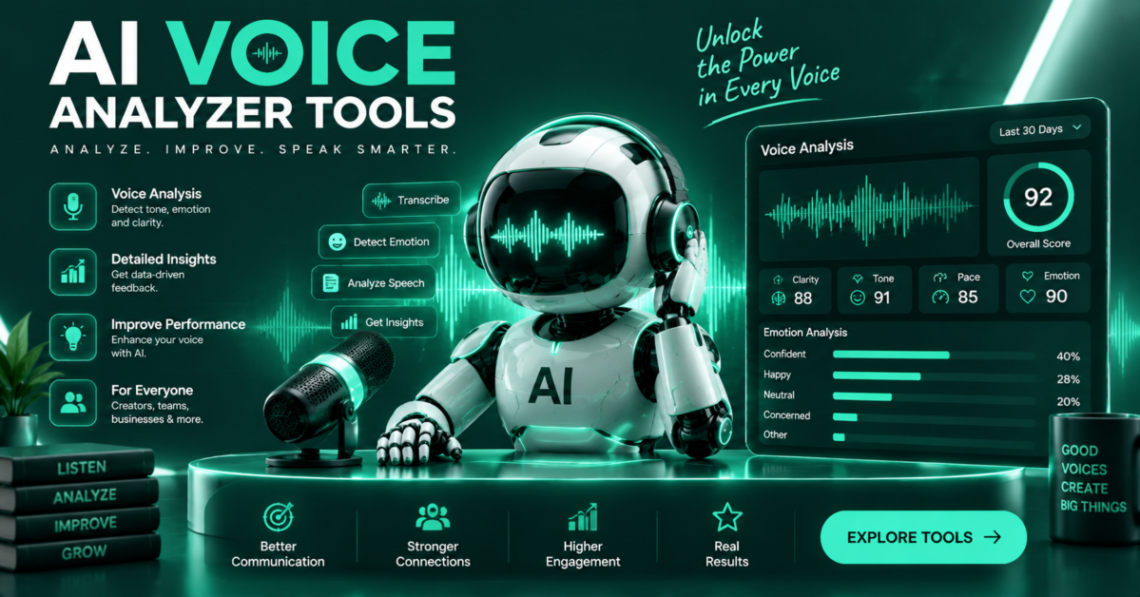
AI Voice Analyzer Tools: What They Actually Do in 2026
“AI voice analyzer tools” is not one category of software. It covers at least four different jobs. One is catching AI-cloned or deepfake voices. Another is mining customer calls for sentiment and risk. A third measures acoustic properties like pitch and jitter. A fourth runs speech-to-text with add-on analytics. A…
-
Best Grok Rank Tracker Tools: What Actually Works
A Grok rank tracker doesn’t check where a page ranks on a results page, because Grok doesn’t produce one. It’s a chatbot that generates a written answer, sometimes with source citations pulled from a live web or X search. So “Grok rank tracking” really means something closer to brand monitoring:…
-
DeepSeek SEO Rank Tracking: What It Actually Means
DeepSeek SEO rank tracking does not mean checking where a page ranks on a results page. DeepSeek does not produce a list of ranked links. It generates a written answer, sometimes with numbered citations, and the practical question for marketers is simpler than the keyword suggests: does DeepSeek mention your…
-
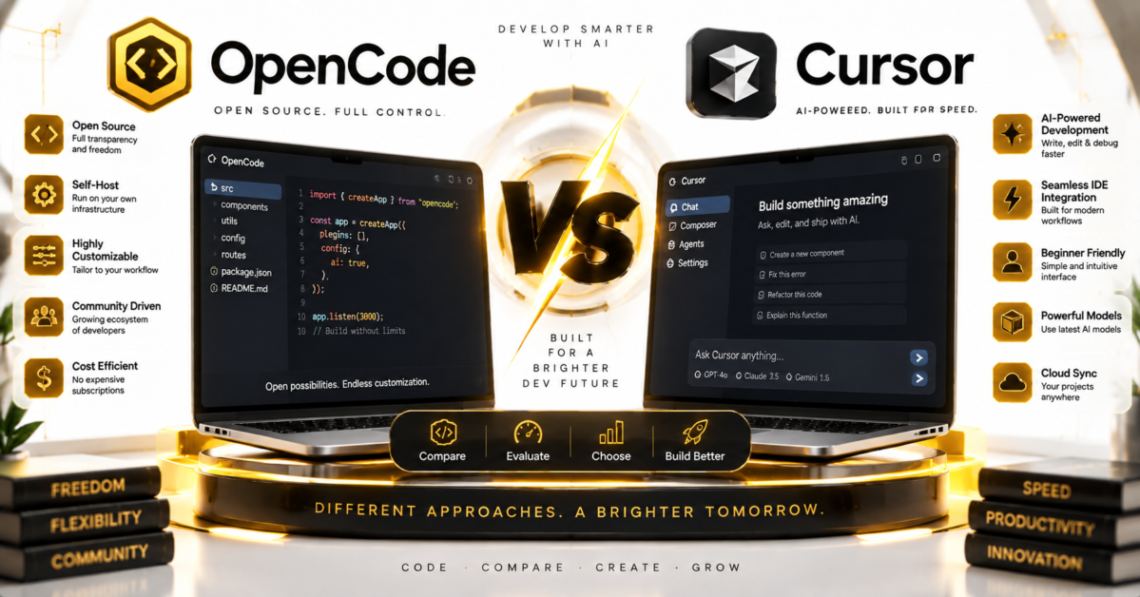
OpenCode vs Cursor: Which AI Coding Tool Fits You
OpenCode vs Cursor solve the same basic problem, getting an AI agent to read your codebase and write code, but they start from opposite ends of the tooling spectrum. OpenCode is a free, open source terminal agent you can point at any model provider. Cursor is a full AI-native code…
-
GPT-4.1 vs DeepSeek V3 Hallucination Comparison: Who Is Best?
There is no honest single-number answer to whether GPT-4.1 vs DeepSeek V3 Hallucination Comparison. On Vectara’s current HHEM-2.3 benchmark for source-grounded summarization, GPT-4.1 has the lower measured hallucination rate: 5.6% versus 6.1% for the original DeepSeek-V3. That is a small advantage for GPT-4.1 under the same evaluation framework. But a…
-
Qwen3-235B-A22B vs GPT-OSS-120B: Which Is Better?
If you are choosing between Qwen3-235B-A22B vs GPT-OSS-120B, GPT-OSS-120B is the more practical default for many English-language reasoning, coding, and agentic deployments. It activates far fewer parameters per token, OpenAI says it can run on a single 80 GB GPU, and independent testing currently favors it over the original Qwen3-235B-A22B…
-
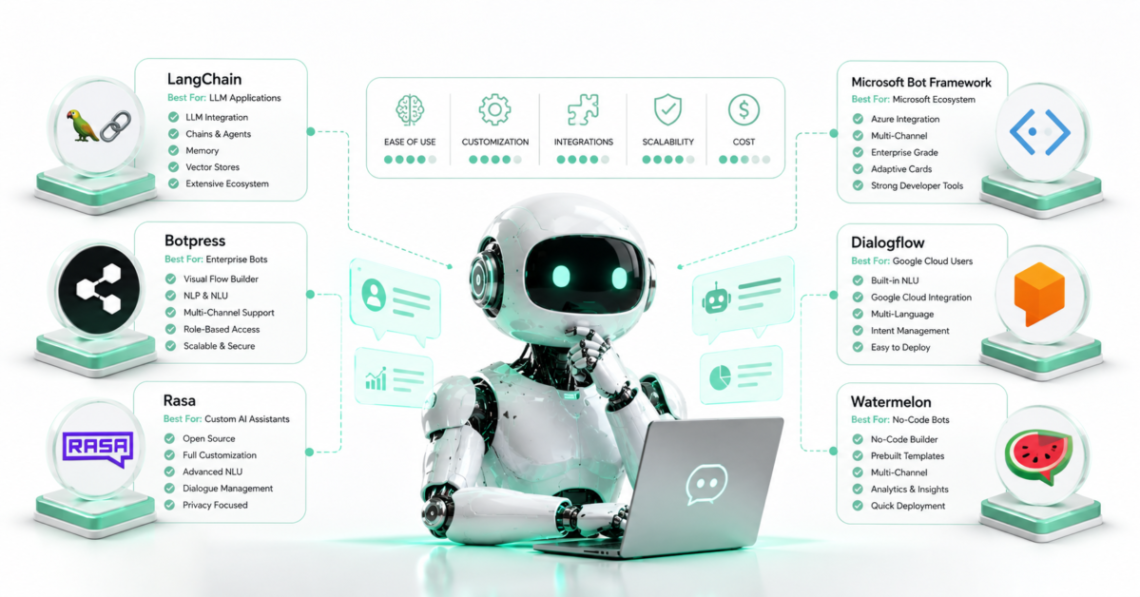
Chatbot Development Frameworks Comparison: 7 Options
The best chatbot development framework depends on what you are actually building. For a model-flexible AI assistant with tools and custom orchestration, LangChain with LangGraph is one of the strongest general-purpose choices. LlamaIndex is better suited to chatbots whose main job is answering questions over private or domain-specific data. Rasa…
-
GLM-5.1 vs Claude Opus 4.6: Which Model Is Better?
If you are comparing GLM-5.1 vs Claude Opus 4.6, the decision is less about finding one universal winner and more about choosing between two different deployment philosophies. GLM-5.1 is the stronger value proposition for developers who want open weights, lower API costs, self-hosting options, and a model designed around long-running…
-
K2 Think V2 Explained: Specs, Benchmarks, and Limits
K2 Think is an open AI reasoning project developed by the Institute of Foundation Models at Mohamed bin Zayed University of Artificial Intelligence (MBZUAI). The current model, K2 Think V2, is a 70-billion-parameter reasoning model built on MBZUAI’s own K2-V2 foundation model. That makes the current K2 Think substantially different…