If you blinked over the past few weeks, you probably missed something. OpenAI announcements have been coming in fast this summer, and late June 2026 turned into one of the busier stretches the company has had in a while. A new model preview, a custom chip project with Broadcom, an acquisition, plugin management tools for businesses, and a confidential IPO filing all landed within about ten days of each other. None of these events happened in isolation either. Taken together, it paints a picture of a company trying to move on multiple fronts at once: research, infrastructure, enterprise tools, and its own corporate structure.
Here’s what actually happened, when it happened, and why each piece matters more than the headline alone suggests.
GPT-5.6 Sol Enters Limited Preview
On June 26, 2026, OpenAI began a limited preview of GPT-5.6, introducing three variants named Sol, Terra, and Luna. The pitch is stronger performance in coding, biology, and cybersecurity, along with a new “ultra mode” for harder reasoning tasks and more predictable prompt caching, which should help developers who’ve been frustrated by inconsistent caching costs in earlier releases.
What’s notable is the rollout pace. Rather than a broad launch, GPT-5.6 is starting with a small group of trusted partners and organizations through the API and Codex. OpenAI has said it plans to widen access to ChatGPT, Codex, and API users soon, but there’s no firm date attached to that yet. If a model release story from OpenAI feels this cautious, it’s usually because the underlying capability jump is real enough to warrant extra scrutiny before a wide release. That caution shows up elsewhere too: alongside the preview, OpenAI published a GPT-5.6 Preview System Card through its Deployment Safety Hub, laying out the model’s safety testing and mitigations in more detail than a typical release note.
For context on how OpenAI structures these staged rollouts, the company’s own safety approach page explains the general philosophy behind preview access versus general availability, though specifics change from release to release.

Retirements That Come With Every New Model
New releases from OpenAI almost always come paired with quiet retirements, and this cycle was no different. As of June 26, 2026, GPT-4.5 was pulled from ChatGPT entirely, including for custom GPTs. That retirement had actually been flagged back on May 28, 2026, so it wasn’t a surprise to anyone paying attention, and existing conversations that used GPT-4.5 now continue on GPT-5.5 automatically. It’s worth flagging that this change applies to ChatGPT only. The API is unaffected, so anyone building on GPT-4.5 through it doesn’t need to scramble.
A similar pattern played out earlier in June. As of June 12, 2026, GPT-5.2 models, covering Instant, Thinking, and Pro variants, stopped being available in ChatGPT, with existing chats shifting to GPT-5.5 automatically. OpenAI has generally kept models available in ChatGPT for around 90 days after a successor ships, and that pattern held here too.
If there’s a lesson buried in these retirements, it’s that anyone relying on a specific ChatGPT model for a workflow should treat that model as temporary. The API tends to be more stable ground if you need long-term consistency.
A Custom Chip With Broadcom
On June 24, 2026, OpenAI and Broadcom unveiled what they’re calling an LLM-optimized inference chip, reportedly nicknamed Jalapeño internally. This is the kind of announcement that doesn’t change anything for the average ChatGPT user tomorrow, but it says a lot about where OpenAI thinks its biggest bottleneck is. Inference, meaning the cost and speed of actually running a trained model to generate responses, has become one of the most expensive parts of scaling AI products. A custom chip designed specifically for that workload, rather than a general-purpose GPU, is a bet that OpenAI can cut costs and improve latency by controlling more of its hardware stack.
This isn’t OpenAI’s first move toward hardware independence, and it won’t be the last. Companies like Google and Amazon have been building custom AI silicon for years through projects like Google’s TPUs. OpenAI partnering with an established chipmaker instead of building fully from scratch is a faster, if less independent, route to the same goal. In my experience, these hardware partnerships tend to take a long time to show up in actual product performance, so don’t expect faster ChatGPT responses next month because of this one announcement.
OpenAI to Acquire Ona
On June 21, 2026, Openai Announcements plans to acquire Ona, though public details on what Ona does and what OpenAI intends to build with it remain thin at this stage. Acquisitions like these tend to be about talent, technology, or both, and OpenAI has made a handful of smaller acquisitions over the past couple of years to fill specific product or research gaps rather than chase headline-grabbing mega-deals. Until more details surface from OpenAI directly or through regulatory filings, it’s hard to say exactly how the acquisition reshapes the product lineup. Worth checking OpenAI’s official newsroom for updates if the acquisition is relevant to your work, since acquisition integrations often get quiet follow-up posts months later.

Openai Announcements: A Confidential Draft S-1 to the SEC
Perhaps the most structurally significant item in this batch of OpenAI announcements: on June 10, 2026, OpenAI confirmed the confidential submission of a draft S-1 to the SEC. An S-1 is the registration statement companies file ahead of a public listing, and submitting it confidentially is a common first step that lets a company begin the review process with regulators before committing to a public timeline or even confirming an IPO is happening at all.
This doesn’t mean OpenAI is going public next quarter. Confidential S-1 filings can sit for months, get amended repeatedly, or in some cases never lead to an actual listing. But it does confirm that IPO preparation, at some level, is underway. Given OpenAI’s unusual corporate structure, built around a nonprofit foundation overseeing a for-profit arm, any eventual public listing would likely draw significant scrutiny over governance and mission alignment. The company’s own “Built to benefit everyone” post from June 8, 2026, which laid out its broader structural plan, reads differently in light of the S-1 news that followed just two days later.
Openai Announcements: Enterprise and Developer Tools Keep Expanding
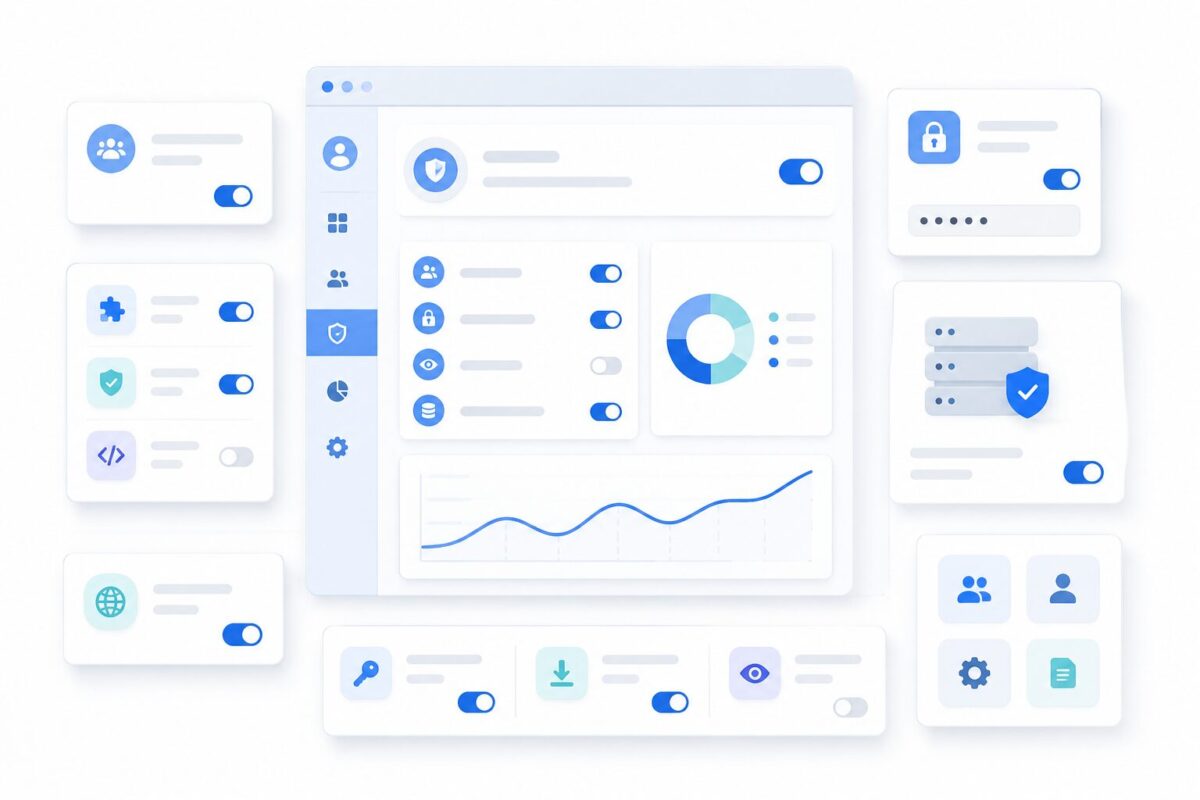
Away from the model and corporate news, OpenAI has been steadily building out its enterprise toolkit. ChatGPT Business added plugin management inside workspace settings, giving admins a single place to search, filter, and control plugin installation policies across categories, roles, and catalog status. Admins and owners can now decide whether plugins are available for members to install themselves or are set to install by default across the workspace. For IT teams managing larger ChatGPT Enterprise or Business deployments, this kind of governance control matters more than any single flashy feature, since it’s what actually determines whether a company feels comfortable scaling ChatGPT usage beyond a pilot group.
Alongside that, Codex Remote became generally available across all ChatGPT plans, allowing users to start or continue coding work on a connected Mac or Windows machine directly from the mobile app, with authenticated device pairing for security. A new DigitalOcean Droplet Workspace plugin also lets Codex provision cloud infrastructure and connect it as a remote workspace, which is a small but genuinely useful addition for developers who want to spin up disposable environments without leaving the Codex interface.
ChatGPT Enterprise and Edu also picked up an updated model picker on the web, iOS, and Android. The interface now makes it easier to balance speed against reasoning effort, with clearer labeling and access controls, though it doesn’t change which underlying models a workspace can actually use.
Openai Announcements: Research and Security Announcements
Not every announcement in this window was product-facing. On June 30, 2026, OpenAI introduced GeneBench-Pro, a research-level benchmark aimed at measuring how AI agents handle ambiguity in computational biology, expanding on an earlier GeneBench framework with harder synthetic tasks. It’s a fairly niche release outside research circles, but it fits a pattern of OpenAI pushing model evaluation deeper into scientific domains rather than just coding or general reasoning benchmarks.
On the security side, OpenAI launched “Daybreak” on June 22, 2026, described as a set of tools aimed at helping organizations secure themselves against AI-related threats. Details on Daybreak’s specific capabilities are still emerging, but the timing, right alongside GPT-5.6’s cybersecurity-focused improvements, suggests OpenAI is treating security as a connected theme across both its research and product announcements this cycle, not a one-off initiative.
Openai Announcements: What to Actually Watch Going Forward
Out of everything covered here, three threads are worth following if you want to understand where OpenAI is headed rather than just what it announced. First, how quickly GPT-5.6 moves from limited preview to general availability, and whether the “ultra mode” reasoning improvements hold up outside curated demos. Second, whether the Broadcom chip partnership shows up in any measurable way in API pricing or latency over the coming months. And third, whether the confidential S-1 filing turns into an actual public offering timeline, since that alone would be one of the largest tech IPOs in years if it happens.
None of these predictions is set in stone. OpenAI has a track record of delaying features, adjusting rollout plans, and occasionally shelving things it has previewed publicly. As always with fast-moving companies like OpenAI, treat specific dates and feature sets as accurate as of late June 2026, and check OpenAI’s own newsroom directly for anything that needs to be current at the moment you’re reading this.
Openai Announcements: FAQs
Is GPT-5.6 available to everyone yet? No. As of this writing, GPT-5.6 is in a limited preview available to select trusted partners through the API and Codex. OpenAI has said broader access to ChatGPT is coming but hasn’t set a firm date.
What happened to GPT-4.5? It was retired from ChatGPT on June 26, 2026, and existing conversations moved to GPT-5.5 automatically. This retirement doesn’t affect the API.
Is OpenAI really going public? A confidential draft S-1 was submitted to the SEC on June 10, 2026, which is a preparatory step, not a confirmed IPO. There’s no public timeline for an actual listing yet.
What is the Broadcom chip for? It’s described as an LLM-optimized inference chip, aimed at making it cheaper and faster for OpenAI to run its models at scale, rather than something that directly changes the end-user product.