If you’ve been creating content with ChatGPT and then fretting about it being identified by AI detectors, you’ve likely already come across Grubby AI—and pondered whether it truly delivers on its promises. In short, it works, but the caveats matter depending on your intended use.
So let’s get to the details.
What Is Grubby AI?
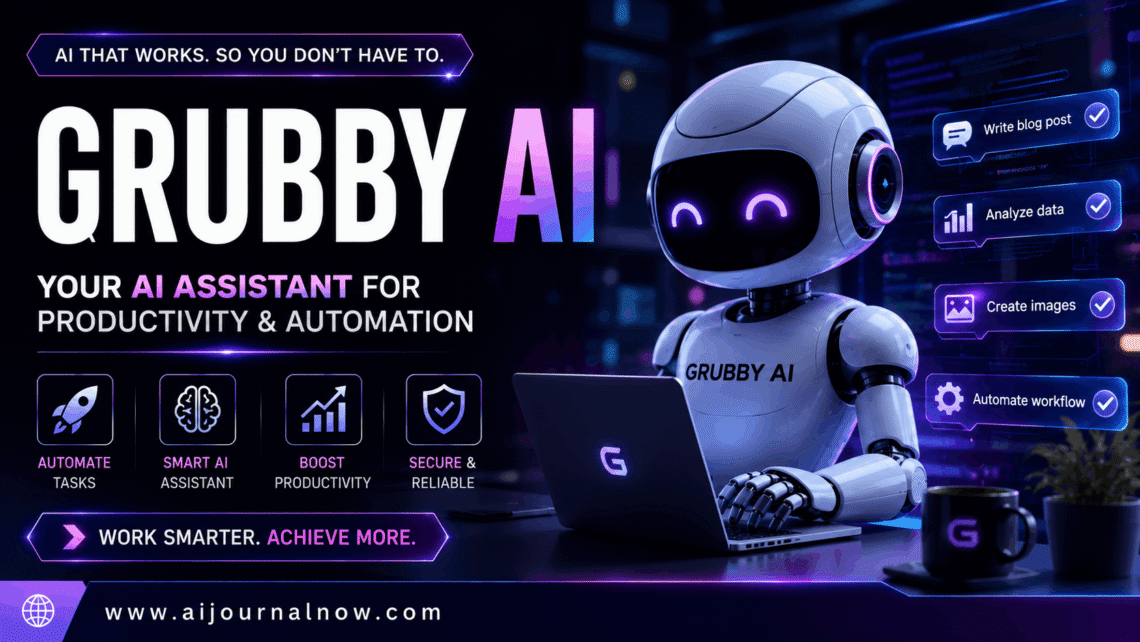
Grubby AI is a text rewriting application that runs in the browser and tries to make AI-generated content sound more human. The tool rewrites the content, and users simply insert AI text into the editor and select a mode.
The application is marketed as an “AI detection remover,” primarily targeting users who don’t want their work to be identified as AI-written. It doesn’t generate creative stuff from scratch—it takes existing text and reworks it so that it sounds more natural.
All you have to do is let the program rewrite your AI-generated material and you will receive language that can easily pass AI detection. The UI is sleek and minimalistic, so even non-technical people can get started with zero learning curve.
How does Grubby AI work?
The program makes sentence-level changes, exchanging words, rearranging phrases, and changing grammar to eliminate the robotic tone that typically accompanies AI writing.
The interface is straightforward; just enter your information, pick a tone, and hit “Humanize” for more authentic, legible results in seconds.
Here’s how it works:
1. Paste your AI text in the editor.
2. Choose your chosen rewrite mode (Simple or Enhanced based on the plan)
3. Click “humanize” and have a rewritten version within seconds
4. Copy the result and use it wherever you want
Grubby AI has a free plan that allows you to generate up to 5,000 words every month. Paid plans get you more active users with larger word limits and more features.
Who’s Grubby AI for?
It’s meant for a particular type of user—and that helps you figure out if it’s right for you.
It is a good idea for students to examine if their works can pass the strict, often inaccurate AI checkers and follow your school and institution rules. If you are an online content creator, blogger, or SEO marketer, the fact that your content can beat AI detectors means it is less likely to incur penalties from penalized by Google. If you’re an advertiser, a good AI detection remover like Grubby AI helps your material read more organically and prevent being identified as spam.
Freelancers who create content for clients using AI tools also find it handy to clean the final drafts before handing them over. The draw of each of these groups is the same: more speed, yet still sounding human.
Benefits of AI Grubby
Ease of use. No setup, no account for basic use, no technical skills necessary. Copy, click, done.
Speed. It takes seconds to rewire what would take a person 20 minutes by hand. That time reduction adds up rapidly with high-volume content processing.
Access to a free tier. Grubby AI provides every new user with free words to humanize AI text, so you may test it out before deciding if the paid plans are worth it.
Broad scope of use cases. The utility is effective for various content formats, including student essays, blog articles, and marketing copy, not demanding specialized skills.
What you need to know
This area is where honesty really counts with Grubby AI—because the tool’s own website confesses its shortcomings.
It tends to have shallow rewriting depth, in the sense that it modifies synonyms and not structure. This means it can be helpful for short emails or simple writings, but it won’t adequately humanize big paragraphs or intricate academic writing.
This may reduce the detection scores on some tools, but others, notably more sophisticated detectors such as Originality.ai, can still recognize AI-written content after humanization. In independent testing, Originality.ai remained rock solid, recognizing AI in both the original ChatGPT text and the Grubby AI remake with almost comparable accuracy.
The corporation concedes in its FAQ that it could still highlight outputs. Product updates are rare, and customer support might be delayed.
Grubby AI can only humanize AI writing into English; therefore, it’s less beneficial for multilingual content teams. Even during testing, the French material was often translated into English, not redone into French.
One last thing to mention, Grubby AI is a humanizer, not a detector. It has no capacity to analyze or categorize input as AI-generated. If you want both detection and humanization in one tool, you’ll need to go elsewhere.
Should You Use Grubby AI?
It all depends on what you want it for. For short-form writing—blog intros, product descriptions, email drafts, and social captions—Grubby AI produces rapid outputs that really cut down on the robotic feel of raw AI output. The free plan is worth a try on that basis alone.
The results are less trustworthy when used for academic submissions, highly examined professional writing, or anything that would go through advanced AI detection technologies. Simply rephrasing things at the surface level is not always enough to deceive the increasingly advanced detection tools that are now available.
Grubby AI earns its seat in a content process as a first-pass polish tool rather than a guaranteed detector bypass. But it might not be the silver bullet for entries that are life-or-death.
Conclusion
Grubby AI is a blunt, no-frills tool with one purpose: make AI-generated writing sound more natural. It achieves that rather well for everyday stuff, costs nothing to try, and has a 0% learning curve.
The limits are real. It won’t beat every detector; it’s English-only, and structural depth isn’t its strong feature. But it saves time and makes for better output quality given the correct use case.
Try it out on your own content with the free tier. If it matches your process, you’ll know within minutes.
Common Questions
Q1: Is Grubby AI free?
Yes. Grubby AI has a free plan with a monthly word limit for humanizing AI text. Users who require higher use limits and additional features can choose paid programs.
Q2: Can Grubby AI beat Turnitin and GPTZero?
Different outcomes. The rewrite may pass certain lighter detectors, but advanced systems like Originality. AI still flags the content after humanization. Outputs may still be identified, the company itself says.
Q3: Does Grubby AI support non-English languages?
Grubby AI works best in English at the moment. Non-English content was shown to generate incorrect outcomes, like translating the text to English instead of humanizing it in the original language.
Q4: Does Grubby AI have an AI detection feature?
No. Grubby AI merely humanizes; it rewrites AI text but does not analyze or score whether the text was AI-generated. A separate tool would be needed for combination detection and humanization.