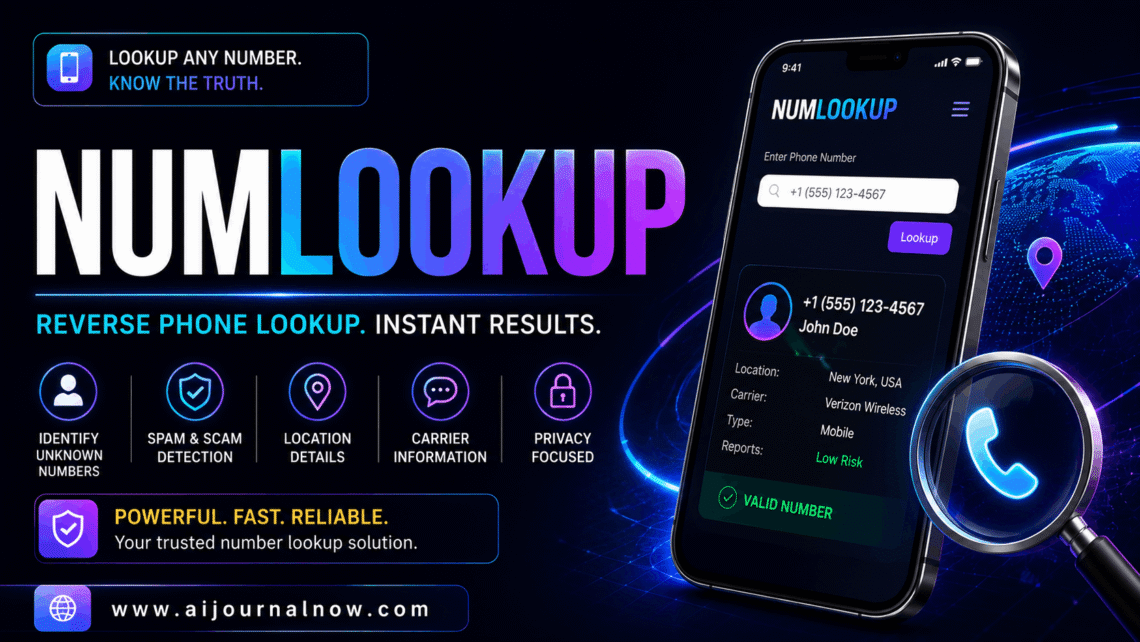
It’s an annoying, all-too-familiar feeling to get a call from an unknown number and not know who is calling—and that’s exactly the problem NumLookup was created to solve. Numlookup is a free, browser-based reverse phone lookup application that enables you to key in any phone number to instantly retrieve facts like the owner’s name, carrier, phone type, and location without having to sign up for an account or pay anything up front. It operates on mobile, landline, and VoIP numbers, with solid coverage in the US and rising coverage internationally.
The idea is simple. When it works well, it’s really handy.
What is NumLookup?
Numlookup is a free internservice for reverse phone lookupsion that was built to allow the general public and companies to identify unfamiliar callers fast. Users may input a phone number and get facts such as the owner’s name, carrier, location, and type of phone. It allows them to authenticate contacts, screen calls, or find out about spam and probable fraud before answering.
It’s not a background check in the traditional sense. The data that numlookup presents comes from public records, carrier databases, and user-submitted information, not from private or legal sources. It’s a fast, simple first layer of identification that is going to work well for most ordinary lookups without the hassle of more formal verification services.
No login required. No download. Search and results in seconds.
How Numlookup Works
Behind-the-Scenes Data Gathering
Numlookup is driven by a network of geographically distributed servers, constantly searching, collecting, and processing publicly available telephone information from all around the world. When you enter a number, the platform checks its database to develop a profile, bringing together name records, carrier data, phone type categorization, location signals, and any spam or scam reports associated with that number.
That underlying infrastructure is what enables NumLookup to provide answers quickly and with decent accuracy for most US numbers in particular.
Performing a Search
The technique is as simple as it gets for a tool. All you have to do is visit the numlookup website on any platform like mobile, tablet, or laptop. Type the phone number (including area code) into the search bar and click search. Results should normally load within a few moments.
On the results page, you will see the name of the owner (if it’s available), kind of phone — mobile, landline or VoIP — carrier, geographical location and whether the number has been flagged by other users as a fraud, robocall or telemarketing. Searches are anonymous, so the person you are searching for will never know that you searched for them.
Who Gets Real Value Out Of NumLookup?
Actual People Answering Calls
Most individuals get calls from random numbers regularly, and numlookup handles the most common use case neatly. You see the number, look it up in under a minute, and you pick whether you want to call back or block. That procedure is a fantastic time-saver and headache-saver for the lone user who is battling robocalls and spam.
Small Business Owners
Sales teams, real estate agents, and customer service departments need to validate inbound data fast. Numlookup helps organizations verify a contact number’s authenticity, identify the carrier for marketing strategy, and indicate problematic numbers before they become an issue. The API access option means development teams can incorporate the features of numlookup straight into current business software.
Freelancers and Marketers
Fast number verification helps freelancers with new client inquiries and marketers managing lead lists. Numlookup takes seconds to check a callback or contact record update with an unknown number and gives you enough context to make an informed conclusion.
For Students and Researchers
Numlookup is a useful, no-friction, jumping-off point for anyone who is examining the trends of phone scams, confirming contact information, or learning about telecoms data sources.
Real Benefits You Should Know
The free tier actually works. Unlike many reverse lookup sites that hide a name behind a paywall, NumLookup offers useful results—carrier, phone type, location, and scam flags—without charge for simple lookups.
The promise of anonymity counts. Your search is secret and will not alert the person you are looking up. That makes Numlookup a good choice for delicate personal scenarios—like checking out a shady number before you engage—without alerting anyone.
The API availability considerably expands the utility of the platform for developers and organizations who wish to automate number verification at scale instead of having to do laborious individual searches.
Honest Limitations To Consider
Data Is Not Always Complete
Numlookup’s results are based only on what information is publicly available for a given integer. For unlisted numbers, freshly ported numbers, and international numbers outside its primary coverage areas, partial or no results often come up. This tool works best with US landline and mobile numbers that have a history of carrier information.
May Vary In Accuracy
Public record data may not be current. Someone who’s changed their number, moved it between carriers, or utilized a VoIP service may return stale or mismatched info. Results should be taken as a valuable beginning point, not a conclusive identification.
We Need a Plan for Paid Features
Basic lookups are free, but more detailed info – like entire address history, connected contacts, and ongoing monitoring with spam alerts – is behind paying levels. The free version is more than enough for occasional personal use. If you use it a lot for professional purposes, it is worth considering the expense of a subscription plan.
In summary
Numlookup always delivers on its primary promise: free, rapid, anonymous reverse phone lookup, providing you with enough information to make an informed decision on an unknown number in under a minute. The free version is actually useful, with a simple UI and no-registration access, which means there is no barrier between you and an answer. It has its limitations when it comes to data accuracy and international coverage, but for the average everyday use case—finding out what a suspicious caller’s number is or validating a US number—NumLookup is one of the most accessible and practical tools out there.
Common Questions
Q1: Is Numlookup totally free?
Basic reverse phone lookups, including owner name, carrier, phone type, location, and spam complaints, are free; no registration necessary. Paid membership plans, which increase with volume of usage, offer more in-depth information, including address history, connected contacts, and monitoring warnings.
Q2: Will the person I search know I searched them?
No. All searches made with Numlookup are totally anonymous. The person the number is associated with is not notified and has no way of knowing you did a lookup. Your question will be kept private to the platform.
Q3: Does numlookup support international numbers?
Numlookup has good coverage for US numbers—mobile, landline, and VoIP—and rising but more limited coverage for overseas numbers. Results for searches outside of the US may be partial or unavailable based on the country and publicly available data for that number.
Q4. Is NumLookup enterprise scalable?
Yes. Numlookup provides API access that allows developers to add reverse phone lookup capabilities to CRM systems, lead management solutions, and customer care applications. If you need to check large volumes of numbers often, you can automate that process, instead of doing individual searches manually.
Also Read: Grubby AI: The AI Humanizer Everyone Is Talking About