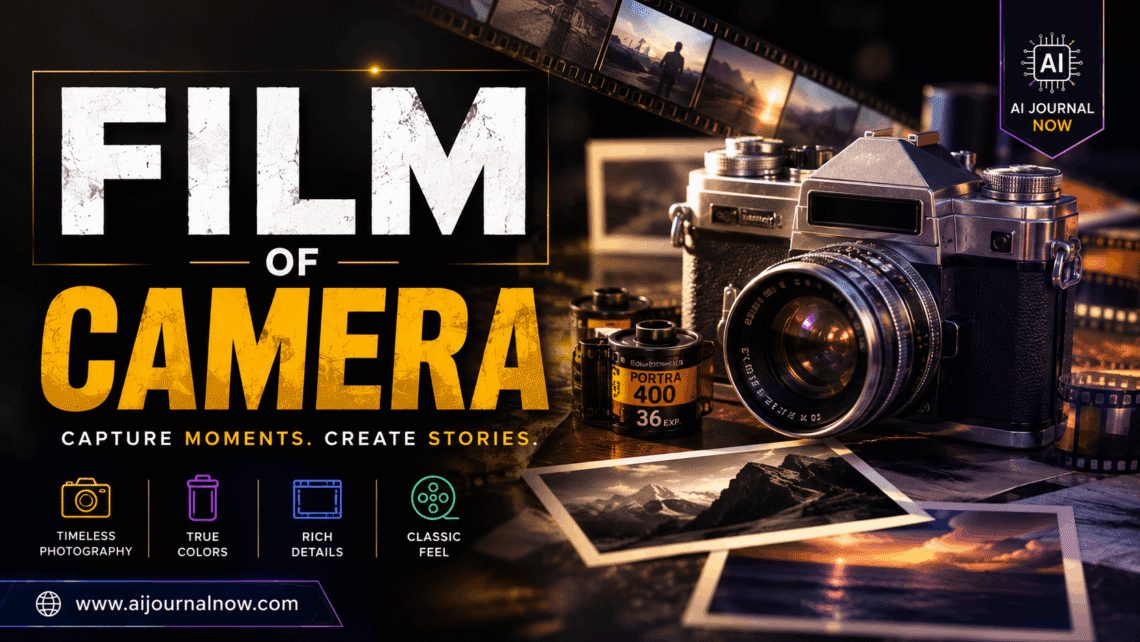
Film from cameras is one of the most remarkable creations in the history of photography, and even in the age of smartphones and digital sensors, it still captures the imagination of photographers around the world. Whether you found an antique camera in your grandparents’ attic or you’re interested in the analogue photography trend you keep seeing on social media, you’ll want to take the time to learn how film works.
This book covers everything from the basics to handy recommendations for absolute novices.
Film of Camera: What Is It Exactly?
The film of a camera is essentially a thin, flexible strip of plastic coated with light-sensitive chemicals—principally silver halide crystals. When light meets these crystals through the camera lens, a chemical reaction happens. The reaction registers the image as a latent or invisible picture on the film. These invisible images are visible photographs when later the film is developed in a dark room with chemical solutions.
It sounds almost mystical, really. Basically, you’re painting with light on a chemical surface.
The most popular format you’ll come across is 35mm film, which is named for its width. There is medium format film (used in larger, more professional cameras) and large format film for studio and landscape photographers. 35mm is the usual starting point for most beginners.
How the Camera Film Actually Works
Understanding the technique helps you understand why film photographers are so cautious and careful with their images. Here is the fundamental flow.
Step 1—Loading You load the roll of film into the camera in the dark so you don’t accidentally expose it. The shutter is behind the film.
Step 2 – Exposure: When you push the shutter button, it opens for a brief moment, letting light through the lens and onto the film. Shutter speed and aperture determine the amount of light. This step is when the image is “pulled out.”
Step 3 — Advance: You wind the film ahead manually (or automatically in some cameras) after each shot so that a fresh, unexposed part of the film is in place.
Step 4 — Development Once a roll of film has been exposed (that’s usually 24 or 36 shots’ worth of frames), the film is sent to a lab—or developed at home—with chemical baths. The three primary chemicals are developer, stop bath, and fixer.
Step 5—Scan or Print: We print the negatives we develop on photographic paper in a darkroom or scan them digitally so you can share them online.
Every step counts. Unlike a mistake with film, which is irreversible, you can delete a terrible digital snapshot in half a second. That’s the challenge and the beauty.
Essential Camera Films
Not all film is equal. Choosing the proper one really makes a difference to your final photographs.
Black and White Movies
Black and white movies are classic, timeless, and forgiving to beginners. Black & white film has a greater exposure latitude; therefore, it is more tolerant of over- and under-exposure than color film. Photographers’ favorites for grain and tonal range are Kodak Tri-X and Ilford HP5.
Colour Negative
This is the most commonly used type of film for cameras. It is a color negative film that is produced or scanned. Good cheap options include Kodak Gold and Fujifilm Superia. Color negative film is also quite forgiving—slightly overexposed photos typically turn out stunningly warm and rich.
Reversal Film (Slide Film)
Slide film, often called transparency or positive film, provides a positive picture that you can view directly. The colors are bright and vivid; however, the exposure latitude is rather tight. Miss the exposure by half a stop and the shot is ruined. This is a camera-kind of film that works well for skilled photographers.
Instant- Film
You see it in cameras like the Polaroid or the Fujifilm Instax, where it develops in your hands in a matter of minutes. It’s not so much about technical accuracy, but rather enjoyment, spontaneity, and the thrill of a physical print you can grasp right away.
Advantages of shooting using camera film:
There are actual, concrete reasons why film photography is making a serious comeback—especially among younger photographers who grew up with digital.
Intentionality: You only have 24 or 36 frames each roll, and you think hard before you hit the shutter. This habit automatically improves your sense of composition, light, and timing.
Distinctive Look: Film grain, color rendition, and tonality from camera photos have a warmth and richness that digital sensors have yet to fully reproduce. It’s not better or worse; it’s just different, and a lot of people find it extremely appealing.
Tactile Experience: There’s just something so rewarding about handling a physical negative, watching a print appear in a darkroom tray, or scrolling through a stack of real images. It slows the photography down in a positive way.
Educational Tool: Many photography instructors still suggest shooting film to beginners because it makes you learn the exposure triangle—ISO, shutter speed, and aperture—without the safety net of quick previews.
Disadvantages of Film Cameras You Should Know
Equally important is honesty about the drawbacks.
Cost: Film isn’t cheap, and it’s growing pricier. You can easily spend $20-40 for a single roll of 36 exposures between the time you buy the roll and get it developed and maybe scanned, depending on where in the world you are.
Limited Shots: 36 frames is great until you’re at a birthday celebration or a street festival. With digital, you take hundreds of shots. You don’t have that luxury with film.
No Instant Feedback: If you’re shipping film to a lab, you won’t see your results for days or weeks. Mistakes are not noticed until it’s too late to reshoot.
Storage and Degradation: Film negatives require careful storage. Over time they might be damaged by heat, humidity, and light. Digital files have their own challenges but tend to be easier to back up.
Practical Uses of Camera Film Today
Film is not just nostalgia. People use it for serious purposes.
Portraits: Many professional portrait photographers offer film sessions as a premium product. There is just no way to duplicate the softness and pleasing nature of skin tones on film in digital.
Wedding Photography: Film wedding photography is a niche that is growing in popularity. Couples pay a premium for that timeless editorial appearance.
Street Photography: A lot of film cameras are small and silent and ideal for candid street work. A Leica or Olympus OM-1 gets a lot less attention than a big DSLR.
Art and Personal Projects: Students, bloggers, and creatives find that shooting film adds an extra sense of authenticity and purpose to their personal efforts. It also shoots beautifully for content—a camera with a roll of film is highly photogenic on its own.
Learning Photography: Freelancers and marketers who are keen to learn photography on a deeper level frequently find that one roll of film teaches them more about exposure than months of shooting digital.
Summary
The film camera is not an antique. It’s a thoughtful and fulfilling method to generate images that feel personal and tactile and that last. Film has something real to give, whether you’re a total newbie grabbing an old point-and-shoot, a blogger seeking a specific aesthetic, or a dedicated photographer trying to refine your foundations. The learning curve is part of the process. Take the grain, take the missed shot, and appreciate the process.
FAQs
Q1: Can a beginner operate a film camera without any photography knowledge?
Yes, it is possible. A simple point-and-shoot film camera requires very few technical skills to get up and running. Load the film, take aim, and shoot. And you may get into manual cameras and slowly study the technical side as you get more curious.
Q2: Where do I develop film these days?
There are still many camera stores in the area that process film. You can also send your rolls to dedicated labs by mail. There are many choices in larger cities. A short search for “film development near me” can show you what’s available in your area.
Q3: Is a Digital camera pricier than a film camera?
There are constant costs of buying rolls and funding for development that do add up. But you can get a decent used film camera for very little. Many individuals find that cost pushes them to shoot more intelligently, which is a benefit, not a bug.
Q4: Which ISO film should a beginner start with?
The best starting point is ISO 400. And it works well in indoor and outdoor light, so you get the freedom without thinking. Kodak Ultramax 400 and Fujifilm Superia 400 are both great and economical options for a first-time film shooter.
Also Read: Leica News: What Every Photography Fan Needs to Know in 2026