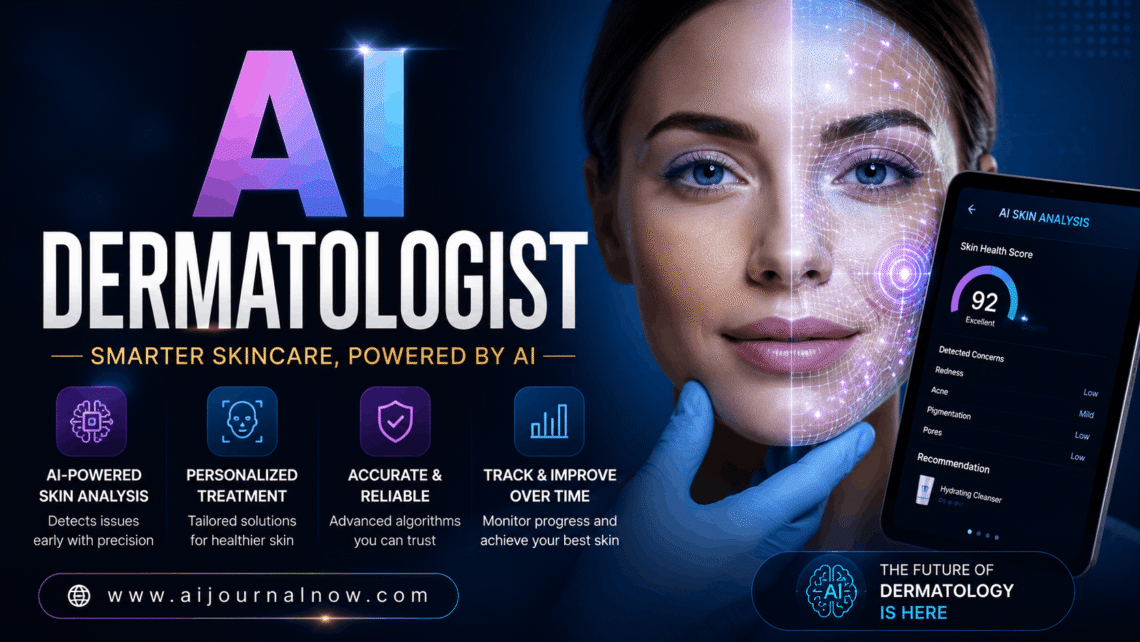
The idea of showing a photo of your skin to an AI dermatologist and getting an instant analysis used to sound like science fiction. Now it’s a genuine option that millions of people are exploring — through apps, websites, and clinical software that can examine moles, rashes, acne, and other skin concerns with a speed no human appointment can match.
But speed isn’t everything. Before you start relying on one of these tools for your skin health, it helps to understand what they actually do, where they’re genuinely useful, and where their limitations start to matter.
What Is an AI Dermatologist?
At its core, an AI dermatologist is a software system trained to recognize and analyze skin conditions from images. It uses a branch of artificial intelligence called “deep learning”—specifically a type of model called a “convolutional neural network”—to examine photographs of skin and compare what it sees against an enormous library of labeled clinical images.
When you upload a photo of a suspicious mole or an itchy patch on your arm, the system doesn’t just run a simple keyword match. It analyzes texture, shape, color variation, borders, and surrounding skin. Based on those features, it produces an assessment — sometimes a specific diagnosis, sometimes a risk level, and sometimes a recommendation to see a human specialist.
Some AI dermatologist platforms are consumer-facing apps. Others are clinical-grade tools used by actual dermatologists to assist with their own evaluations. The two categories work differently and carry very different levels of accuracy and reliability.
How an AI Dermatologist Actually Analyzes Skin
The training process is what makes or breaks these systems. A well-built AI dermatologist is trained on hundreds of thousands—sometimes millions—of labeled skin images. Those images are tagged by human experts: this is melanoma, this is eczema, this is a benign seborrheic keratosis, and so on.
The model learns patterns across thousands of examples of each condition until it can recognize them in new images it’s never seen before. Over time, the best systems reach accuracy rates that genuinely compete with trained clinicians on specific tasks — particularly for identifying melanoma from dermoscopy images.
That said, training data matters enormously. If a model were trained primarily on images of lighter skin tones, it would perform worse on darker skin tones. This is a real and documented limitation in the field, and it’s one reason why not every AI dermatologist tool should be trusted equally.
What an AI Dermatologist Can Help You With
Despite the limitations, there are real practical situations where these tools add genuine value.
Early Skin Cancer Screening
One of the most studied applications is melanoma detection. Several peer-reviewed studies have shown that well-trained AI systems can match or even outperform general practitioners at identifying suspicious lesions. For people who live far from a dermatology clinic or face long wait times, an AI dermatologist can be an important first filter—flagging something that needs urgent attention before it becomes more serious.
Monitoring Skin Changes Over Time
Some apps let you photograph and track moles or spots regularly, alerting you when a lesion appears to have changed in size, shape, or color. This kind of longitudinal monitoring is genuinely useful. Skin cancer caught early is far more treatable, and consistent tracking — even with imperfect AI — is better than doing nothing.
Managing Common Skin Conditions
Beyond cancer screening, an AI dermatologist can help identify common conditions like acne severity, rosacea, psoriasis, and fungal infections. For someone trying to figure out whether a breakout is hormonal acne or contact dermatitis, getting an initial read before scheduling an appointment can save time and reduce unnecessary anxiety.
Accessibility for Underserved Populations
This is perhaps the most compelling real-world argument. Dermatologists are unevenly distributed — heavily concentrated in urban areas and largely inaccessible to people in rural or low-income communities. An AI dermatologist doesn’t require an appointment, doesn’t charge a consultation fee upfront, and is available at any hour. For people who might otherwise wait months or skip a skin check entirely, these tools open a door that didn’t previously exist.
The Honest Limitations of an AI Dermatologist
It would be irresponsible to discuss these tools without being direct about what they can’t do.
Image Quality Dependency
An AI dermatologist is only as good as the image it receives. A blurry photo taken in bad lighting can produce an inaccurate result. Clinical-grade tools use standardized dermoscopy cameras. Consumer apps rely on smartphone cameras held by untrained hands. The gap in image quality translates directly into a gap in reliability.
No Physical Examination
Real dermatologists don’t just look at your skin — they press it, stretch it, ask about symptoms, review your medical history, and consider dozens of contextual factors. An AI dermatologist sees a flat image. It cannot feel a raised nodule, assess texture through touch, or factor in whether you’ve been on antibiotics recently. That gap matters, especially for ambiguous cases.
Regulatory and Liability Gray Areas
Most consumer AI dermatologist apps are not FDA-cleared medical devices. They’re wellness tools, and their disclaimers reflect that. Using one as a substitute for medical advice rather than a complement to it carries real risk. A false negative — where the AI misses something serious — can delay treatment with serious consequences.
Bias in Training Data
As mentioned earlier, models trained on non-diverse datasets perform unevenly across skin tones. This is an active area of research and improvement, but it remains an issue in many currently available tools. Always check what data a platform was trained on before trusting its results for your specific situation.
How to Use an AI Dermatologist Responsibly
The most useful framing is to treat an AI dermatologist as a smart first step, not a final answer. Here’s how to get the most out of it without putting yourself at risk.
Use it to decide whether to seek care, not to replace care. If the tool flags something as high-risk, book an appointment. If it says something looks benign but you’re still worried, book an appointment anyway. The AI should inform your decision, not make it for you.
Pay attention to the platform’s credentials. Look for tools that have been validated in peer-reviewed studies, cleared by regulatory bodies like the FDA or CE in Europe, or developed in partnership with academic medical centers. Consumer apps with no published research behind them deserve far more skepticism.
Take consistent, high-quality photos. Use natural lighting, hold the camera steady, and capture the full lesion without shadows. Some apps give specific photography guidance — follow it. The better the input, the more useful the output.
Don’t use it for urgent symptoms. If a mole has changed dramatically in weeks, if you have a sore that isn’t healing, or if you’re experiencing symptoms alongside a skin change, see a doctor. An AI dermatologist is not an emergency room.
Who Benefits Most From an AI Dermatologist?
The answer is broader than most people expect.
Students living on tight budgets with no dermatologist nearby can use these tools to get an initial read before deciding whether to spend money on a clinic visit. Freelancers and remote workers without comprehensive health insurance can use them to triage concerns without an expensive specialist appointment. Older adults who want to monitor aging skin changes between annual check-ups have a practical monitoring tool available 24/7.
Even within clinical settings, doctors are using AI Dermatologist software to get a second opinion on borderline cases, reduce diagnostic variability between practitioners, and keep up with a growing patient load without sacrificing care quality.
FAQ: AI Dermatologist
Q: Is an AI dermatologist accurate enough to trust? For certain tasks — particularly melanoma screening using high-quality dermoscopy images — top-tier systems have demonstrated accuracy comparable to trained specialists. For general consumer apps using smartphone photos, accuracy varies widely. Always treat results as a guide, not a diagnosis.
Q: Can an AI dermatologist diagnose skin cancer? Some tools are specifically designed and validated for skin cancer risk assessment, particularly melanoma. However, no AI tool should be used as a definitive cancer diagnosis. A biopsy performed by a qualified medical professional remains the only confirmed method of diagnosing skin cancer.
Q: Are AI dermatologist apps free to use? Many offer free basic assessments with premium tiers for more detailed analysis or regular monitoring. Clinical-grade tools are typically licensed to healthcare providers rather than sold directly to consumers.
Q: What’s the difference between a consumer AI dermatologist app and a clinical AI tool? Consumer apps are designed for self-use with smartphone photos and general guidance. Clinical tools are built for use by trained practitioners with standardized imaging equipment, validated datasets, and regulatory approval. The accuracy gap between the two can be significant.
A Practical Tool With Real Limits
An AI dermatologist represents a genuine shift in how people can access skin health information. It’s fast, available, and increasingly accurate for specific tasks. For millions of people who don’t have easy access to professional dermatology care, that matters enormously.
But it works best when used with realistic expectations. Think of it the way you’d think of a very well-read friend who knows a lot about skin conditions—helpful, informative, and worth listening to—but not a replacement for the doctor who can actually examine you.
Use it wisely, and it’s a valuable tool. Treat it as infallible, and the risks grow quickly.
Also Read: Edge AI News: What’s Happening Right Now and Why It1 Matters


