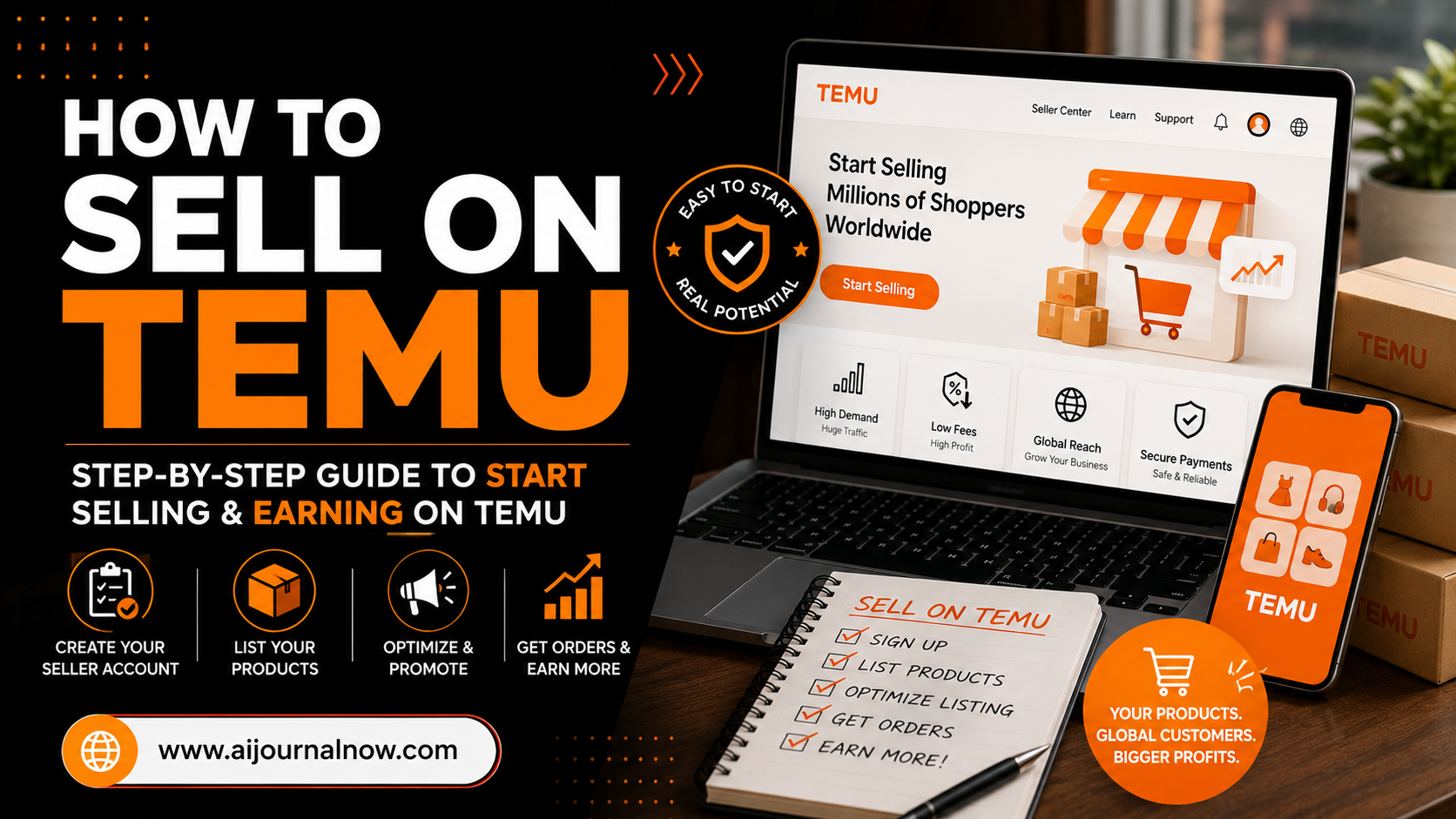
Temu has erupted into the e-commerce landscape and swiftly became one of the most downloaded shopping apps in the world. impossible low prices , huge product catalogue , aggressive marketing — it’s hard to ignore. So clearly a lot of people had begun asking themselves: can I get in on this? Can I really sell on Temu as well?
The honest answer is yes — but how to sell on Temu is different from what most people assume. It’s not like creating an Etsy store or selling stuff on eBay. The approach is more structured, more controlled and has its own set of requirements that not every vendor will qualify for straight immediately.
This post breaks things out so you’re aware of what you’re getting into before you apply.
How to Sell on Temu: Knowing the Platform First
Before we go into the how-to-apply, it’s helpful to understand what Temu actually is, and how it produces money.
Temu is owned by PDD Holdings, the same Chinese business that owns Pinduoduo, one of the top e-commerce platforms in China. Temu was started in the US in 2022 and quickly extended to Europe, Australia and other markets. Its business approach is focused on very competitive pricing, achieved by dealing mainly with manufacturers and high volume suppliers – most of which are situated in China.
That’s vital context. Temu is not a conventional open marketplace where anyone may sell anything. It’s a curated marketplace, meaning the platform has a lot of control over pricing, product quality, and seller qualifications.
Knowing this at the beginning avoids a lot of confusion later on.
Who Can Actually Apply to Sell on Temu
This is when many a would-be seller hits their first wall.
Temu has always focused on sellers that are either manufacturers or have access to huge inventories with very low unit prices. If you’re a small handmade goods vendor, a reseller buying from retail, or someone with a limited inventory, the platform may not be for you — at least not now.
Sellers who tend to pre-qualify include:
- China-based manufacturers or those with direct manufacturing ties
- Large-volume inventory and competitive wholesale pricing for businesses
- Established vendors who have experience on platforms such as Amazon, Shopify or AliExpress
- merchants based in the US (Temu has been growing its seller base to include domestic sellers in some categories)
Example: One tiny electronics accessories firm in Guangdong scaled well on AliExpress and then applied to sell on Temu. Their per-unit costs were low enough to hit Temu’s price targets and they had the production capacity to accommodate big order volumes. They got approved within 2 weeks. At the same time, a US-based reseller that purchased the same product type at retail and marked it up, discovered their margins didn’t line with what Temu’s business demanded.
The platform is competitively priced – and the sellers have to be competitive as well.
How to Sell on Temu: A Step-by-Step Guide to the Application Process
Here’s how the procedure usually works if you’re eligible:
Step 1: Go to the Temu seller registration page. Navigate to Temu’s seller registration page. The website link and exact procedure may differ by location, therefore you should search for “Temu seller registration” on the official Temu website to discover the latest link for your nation.
Step 2: Enter your business information. You’ll need to enter information such as business registration documents, tax identification, bank account data, and information about your product categories and supply chain.
Step 3: Product and price review. Temu reviews your catalogue and price. This is the moment when many merchants discover if their cost structure is in line with what the platform anticipates. Be honest – lying about your expenses or capabilities usually causes problems down the line.
Step 4: Agreement and onboarding. If your application is approved, you will sign a seller agreement and go through onboarding, which will outline Temu’s operational expectations on packaging standards, delivery schedules, quality control, and return processing.
Step 5: Add products and start fulfilling orders. Once your shop is up, you’ll be managing inventory and meeting Temu’s operational needs and seller metrics.
The application to approval process can take anything from a few of weeks to a few months, depending on the category and amount of applicants at the time.
Temu Selling: The Actual Experience
Here is a genuine look at what happens once you are live on the platform.
Temu controls much. Limited pricing flexibility – The whole platform’s identity is founded on low prices. If your cost structure doesn’t allow for competitive pricing, you’ll have a hard time getting awareness. Temu also has its own promos and discounts, which may automatically apply to your items.
On the plus side, Temu handles a lot of the customer-facing work. Marketing, platform traffic and customer acquisition all take place on the platform level. You’re not establishing an audience of your own, you’re tapping into one that already exists and it’s massive.
Sample One kitchenware provider, who mostly supplied on a wholesale site, decided to try Temu as a new sales channel. Their order volume increased in the first month but their margin per unit plunged due to Temu’s pricing demands and promotional offers. They remained on the platform since the volume compensated for the decreased margin, but it was a matter of recalibrating their whole pricing approach.
That’s the Temu selling experience in a nutshell. High volume, tighter margins.
Temu Seller Restrictions to Know Before Selling on Temu
It’s good to be honest about the disadvantages.
Limited seller autonomy Unlike on Shopify or even Amazon, you don’t get control over your shopfront design, promotions or the way your products show up in search results.
Pricing pressure is real. The whole Temu model is about being cheaper than everyone else. If you can’t keep cheap price over time, it’s hard to be competitive on the marketplace.
Temu owns the customer relationship. Temu vendors don’t own the customer relationship, like if you had your own store. You’re catering to Temu’s consumer base, not creating your own.
Eligibility is sometimes a crap shoot. Some vendors complain about poor communication during the application process. Having all of your papers ready and being patient with the time limit helps.
How to Promote on Temu: Is It the Right Platform for You?
Ask yourself 3 honest questions:
- Am I able to manufacture or source products at a low enough cost to compete on a low-price driven platform?
- can I manage major surges in orders with my manufacturing capacity and inventory volume?
- Am I happy with minimal control of pricing, branding and customer relationship?
If the answer to all three is affirmative, then Temu is worth serious pursuit. If any of these makes you think twice it might be smarter to start on a platform like Etsy, Amazon, or your own Shopify store first then return Temu when you can absorb the requirements of it.
FAQ for Selling on Temu
Q: Is Temu invite-only, or can anyone sell on it?
A: Temu doesn’t have open enrolment, it has an application process. You apply, pass company paperwork and go through a review. It’s not totally invite-only, but it’s not as open as, say, Etsy or eBay, where you can offer something the same day you sign up.
Q: Do I need to be located in China to sell on Temu?
A: Not always. Temu has been growing its pool of sellers to include those in the US and those in other places. But many of the platform’s current merchants are manufacturers or Chinese-based suppliers. Requirements may vary by category and/or region
Q: Temu handles shipping on behalf of the merchants.
A: This depends on your region and your seller agreement. Some merchants ship directly to clients, and others, through Temu’s logistics network. Regardless of whose model you select, the platform has certain packaging and schedule constraints. Clarify shipment arrangement during onboarding.
Q: Is it possible to earn money selling on Temu?
A: It can be but it really relies on your cost structure as to whether or not you make a profit. Sellers who have cheap per unit production costs and can handle huge volumes tend to do well. High cost or thin margin sellers generally can’t meet the platform’s pricing expectations. Check things out before you sign on the dotted line.
Summary
The most important part of selling on Temu isn’t if you can technically apply or not, it’s knowing if Temu is a good fit for your business. It’s a real platform, with a tonne of traffic, and a real chance for the proper type of vendor.
But it favours size, low costs and operational discipline. Come in with realistic expectations, have your documents in order and know your figures before applying.
If it’s the proper fit, Temu can provide you a scale of orders you won’t get anyplace else. If it’s not the right fit yet, there is no shame in building your foundation elsewhere first, and coming back when you’re ready.
Also Read: Is Zazzle a Legit Website for Buyers and Sellers?