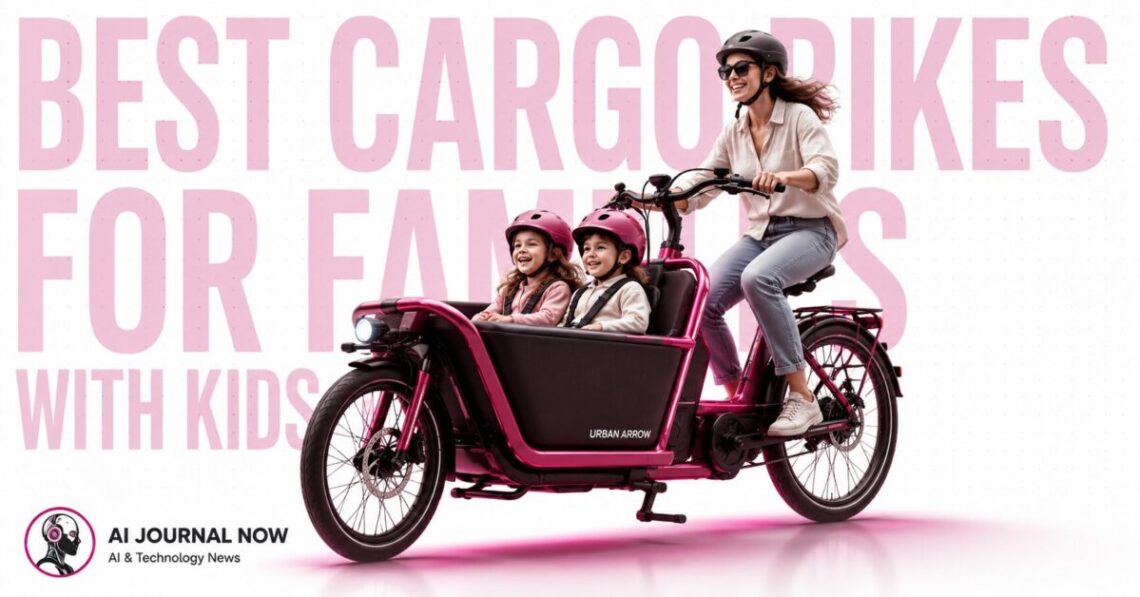
If you’ve ever tried to wrangle two kids, a soccer bag, and a backpack onto a regular bike, you already know why cargo bikes exist. They’re not a novelty anymore. In many neighborhoods, they’ve quietly replaced the second car. Finding the best cargo bikes for families with kids is really about matching the bike’s size, weight capacity, and handling to your actual daily routine, not just picking whatever’s trending on Instagram.
I’ve spent a fair amount of time around parents who’ve made the switch, and the same handful of models keep coming up. Below is a rundown of the ones worth your attention, what makes each one different, and who should probably look elsewhere.
Best Cargo Bikes For Families With Kids: Quick Answer: Our Top Picks
- Best overall for most families: Tern GSD
- Best for hauling multiple kids long-term: Riese & Müller Load
- Best fully enclosed option: Urban Arrow Family
- Best budget entry point: RadWagon 4 (Rad Power Bikes)
- Best for larger families or gear-heavy trips: Yuba Spicy Curry
- Best for a wagon-style ride feel: Bunch Bike The Original
| Bike | Style | Typical Weight Capacity | Rider Type | Starting Price Range* |
|---|---|---|---|---|
| Tern GSD | Compact longtail | ~180 kg total | Everyday commuting families | $4,000–$6,500 |
| Riese & Müller Load | Front-loader (box) | ~200 kg total | Multi-kid, long-term use | $6,000–$9,000 |
| Urban Arrow Family | Front-loader (box) | ~125 kg cargo | Weather-exposed climates | $5,500–$8,000 |
| RadWagon 4 | Longtail | ~150 kg total | Budget-conscious buyers | $1,900–$2,300 |
| Yuba Spicy Curry | Mid-tail | ~180 kg total | Active, gear-heavy families | $3,800–$4,800 |
| Bunch Bike: The Original | Front-loader (box) | ~100 kg cargo | First-time cargo bike buyers | $4,000–$5,500 |
*Pricing shifts often depending on battery size, accessories, and region. Check each brand’s official site for current numbers before buying.
Tern GSD: The One Most People End Up Choosing
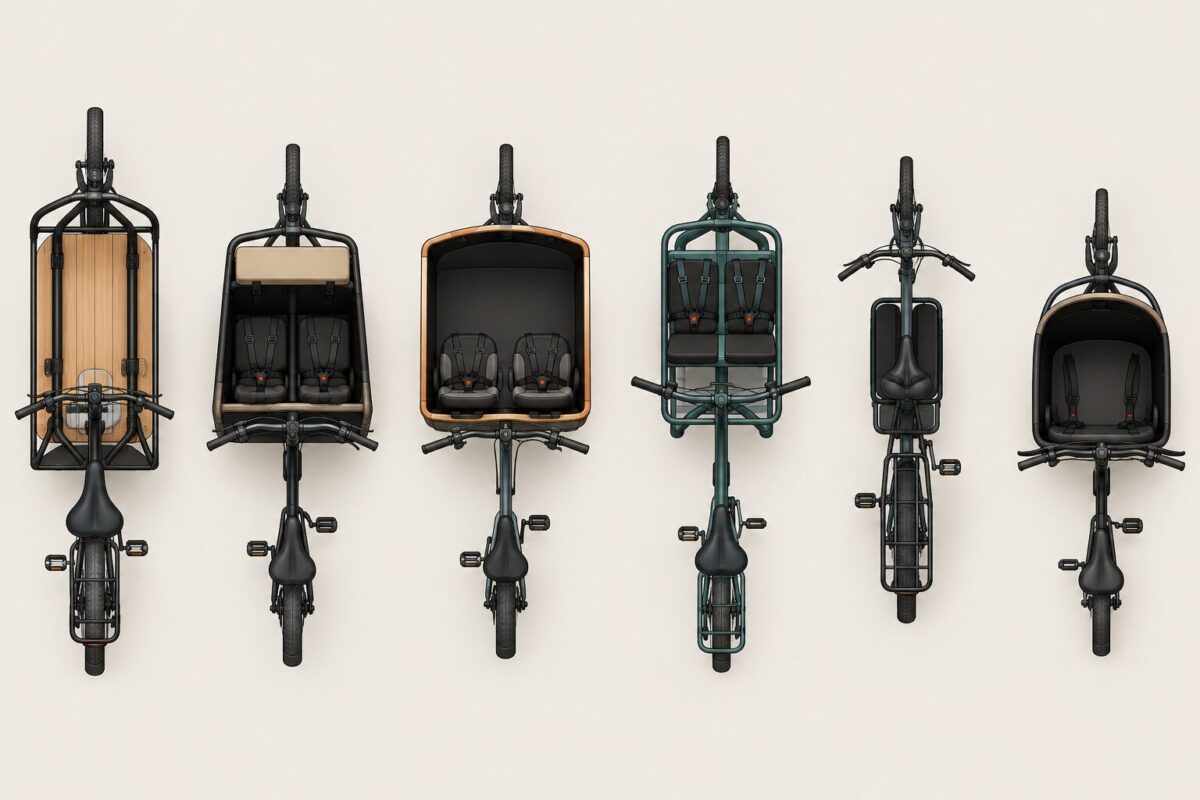
The Tern GSD has become something of a default recommendation, and there’s a reason for that. It’s shorter than most cargo bikes, which matters more than people expect once you’re trying to park it in a garage or wheel it through a narrow gate. Despite the compact footprint, it still carries two kids comfortably with the right seat accessories.
What tends to surprise people is how stable it feels at low speeds with a loaded rear rack. A lot of longtail bikes get wobbly when you’re balancing at a stoplight with 60 pounds of kid on the back. The GSD’s low center of gravity handles that better than most.
The downside is the price climbs fast once you start adding the child seats, running boards, and rain canopy that most families end up wanting anyway. So, when you’re budgeting, make sure to include the accessories, not just the base bike. You can check current configurations and pricing directly on Tern’s official product page.
Riese & Müller Load: Built For The Long Haul
This is the bike for parents who plan on hauling kids for the next five to eight years, not just through toddlerhood. The front cargo box on the Load is genuinely spacious, and the dual battery option on higher trims means range anxiety mostly disappears, even on hilly routes.
It’s also the priciest bike on this list by a fair margin. German engineering costs what it costs, and the load leans premium in every sense: suspension, build quality, and drivetrain options. If you’re the type who researches everything before buying anyway, it’s worth reading through Riese & Müller’s official specifications before comparing it to cheaper alternatives, because the spec sheet explains a lot of the price gap.
One thing worth flagging: the front-box design means your line of sight to the kids is excellent, but the turning radius is wider than a longtail. It’s not a bike you can casually ride through a crowded farmers market.
Urban Arrow Family: Weatherproofing Done Right
Urban Arrow built its reputation in the Netherlands, a country where Best Cargo Bikes For Families With Kids are practically a school-run requirement, and it shows. The family model’s box is deep enough for two kids plus groceries, and the optional rain tent actually keeps kids dry rather than just looking like it should.
In my experience, families in wetter climates gravitate toward front-loader boxes like this one specifically because of the weather protection. A longtail with an open-air seat just doesn’t compete once October rain sets in.
The step-through frame is low, which matters more than it sounds for shorter riders getting a loaded bike on and off its stand. Details on trims and battery options are on Urban Arrow’s official site.
RadWagon 4: The Realistic Entry Point
Not every family needs to spend six thousand dollars to get into cargo biking, and the RadWagon 4 proves it. It’s a longtail electric cargo bike from Rad Power Bikes, and it undercuts most of this list by a wide margin while still hauling a decent amount of weight.
You give up some of the refinement. The ride quality isn’t as smooth as the Tern or Riese & Müller options, and the accessory ecosystem is smaller. This model is a sensible place to start for families testing whether cargo biking fits their routine before committing serious money. Full specs are on Rad Power Bikes’ official website.
If your kids are still young and you’re not sure cargo biking will stick as a habit, starting cheaper here and upgrading later isn’t a bad strategy at all.
Yuba Spicy Curry: For Families Who Haul More Than Kids
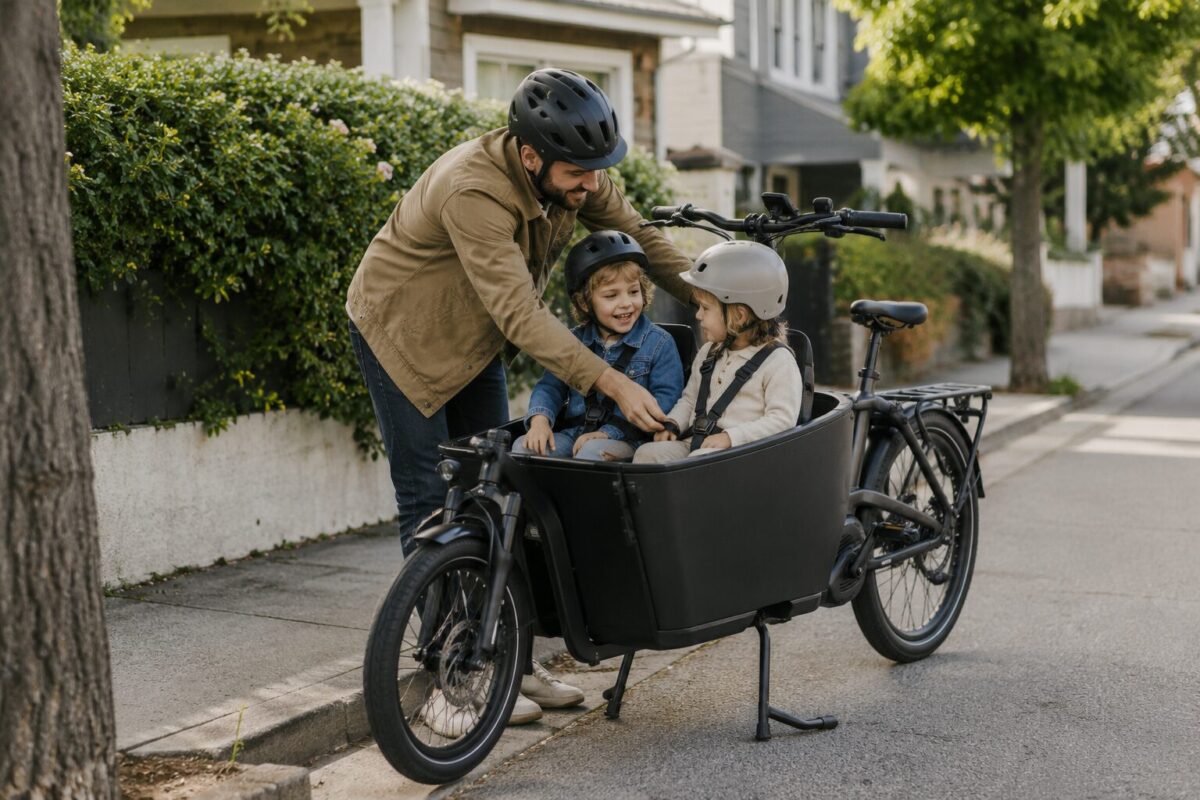
Yuba has quietly built some of the most functional mid-tail cargo bikes on the market, and the Spicy Curry is a prime example. It splits the difference between a compact longtail and a full cargo box, which makes it maneuverable while still handling a serious amount of weight.
This one tends to appeal to families who use the bike for more than school drop-off. It can handle grocery runs, camping gear, and even a second bike strapped to the side rails. The accessory system is modular enough to reconfigure depending on what the day needs. You can browse the current lineup on Yuba’s official site.
It’s not the flashiest bike here, and the styling is more utilitarian than sleek. But function over form is precisely the point for many buyers.
Bunch Bike The Original: A Different Kind Of Ride Feel
Bunch Bike markets itself around the “wagon” experience, and riding one does feel distinct from the other front-loaders on this list. The wide box and slightly different geometry give it a stable, low-speed feel that some parents prefer over the more bike-like handling of a Riese & Müller or Urban Arrow.
It’s a solid middle-ground option price-wise, sitting below the premium German brands but above the budget longtails. Worth cross-referencing current models and pricing on Bunch Bike’s website since they’ve expanded their lineup over the past couple of years.
Best Cargo Bikes For Families With Kids: What Actually Matters When Choosing
Weight capacity is the most heavily promoted feature, but it rarely is relevant for most families. What matters more in practice is garage clearance, how the bike handles when it’s half-loaded (not fully loaded, which is a different balance problem), and whether the child seats you want are actually compatible with that frame.
Range is another one people underestimate. A 30-mile advertised range usually assumes flat terrain and moderate assistance. Add two kids, a few hills, and a rushed school-run pace, and the real-world range often lands closer to 60-70% of the spec sheet number. If your daily loop is genuinely short, this detail barely matters. If you’re doing longer suburban routes, it’s worth test-riding loaded, not empty, before you commit.
Wikipedia’s cargo bike overview provides general background on the evolution of the category and the current safety standards, while outlets like The Verge’s transportation coverage periodically report on new releases and regulatory changes worth tracking.
Who Should Skip Cargo Bikes Entirely
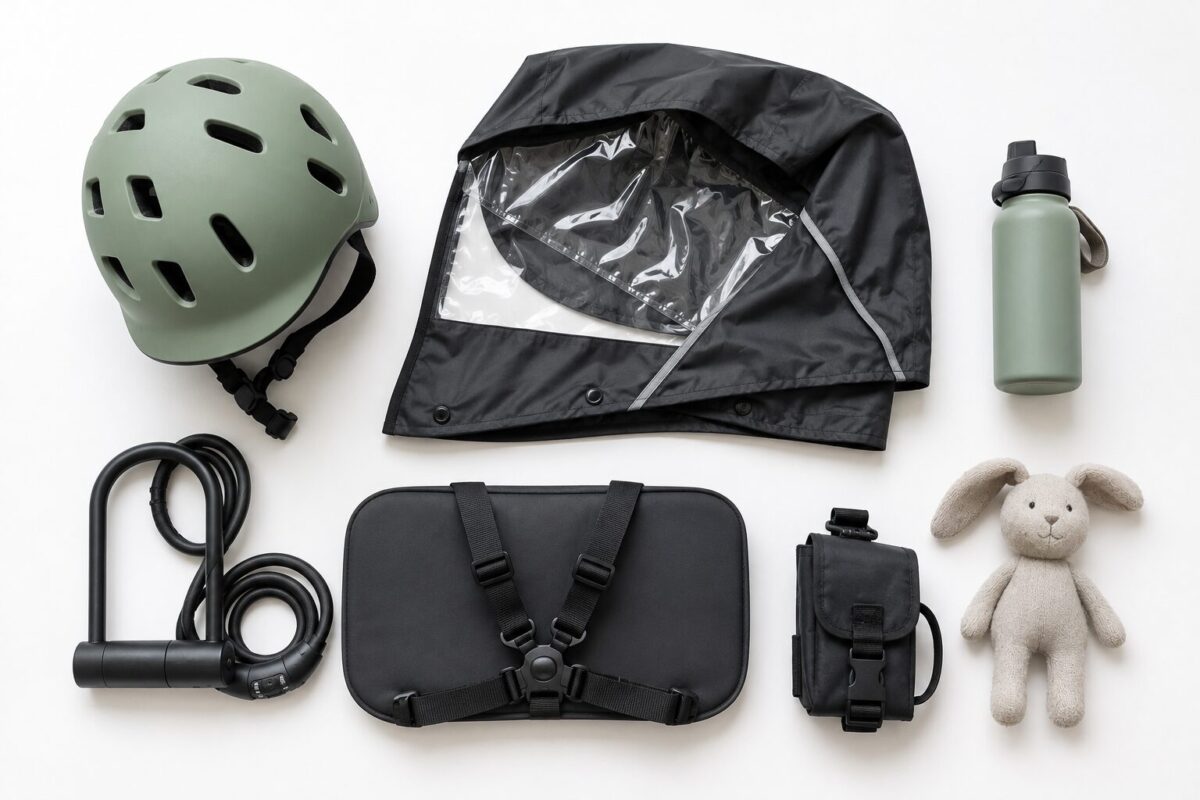
Not every household benefits from one. If your routes involve steep, sustained hills and you’re not planning to spend extra on a dual-battery setup, the daily experience can get discouraging fast. And if secure parking or storage is genuinely limited, a cargo bike left exposed outdoors will age faster than you’d like, regardless of brand.
Families in car-dependent suburbs with long highway-adjacent commutes usually get less value here too. Cargo bikes shine on trips under five miles on bikeable infrastructure. Beyond that, the calculus changes.
Best Cargo Bikes For Families With Kids: Frequently Asked Questions
What’s the weight limit I should actually plan around? Manufacturer numbers usually include the rider, so subtract your weight before estimating what’s left for kids and cargo. A bike rated for a total of 180 kg, with a 70 kg adult rider, leaves about 110 kg for everything else.
Do I need a special license to ride a cargo bike? In most US states and much of Europe, electric cargo bikes that fall under standard e-bike classifications don’t require a license. Rules vary by region and by the bike’s top assisted speed, so it’s worth checking local regulations before buying.
How long do the batteries typically last? Battery lifespan depends heavily on charging habits and mileage, but most quality cargo bike batteries retain meaningful capacity for 500-800 full charge cycles before noticeable degradation. That’s roughly 3-5 years of regular family use for most riders.
Are front-loader boxes safer than long-tail seats? Front boxes keep kids within your direct line of sight and lower to the ground, which some parents find reassuring. Longtails place kids behind you, higher up, but modern seat harnesses on both styles meet similar safety standards. It comes down to preference more than a clear safety edge either way.
Cargo biking with kids isn’t for every family, but for those it fits, it often becomes their default way to get around in a few months. Test ride loaded if you can, factor in the accessories you’ll actually need, and pick the bike that matches your real routes rather than the one with the flashiest spec sheet.