The standard iPhone never gets the spotlight. Apple saves that for the flashier models, the ones with “Pro” in the name and a price tag to match. But that rarely stops the base model from being the one most people actually buy. The iPhone 17 proves you don’t need a Pro label to get a true flagship experience, and with some genuinely meaningful upgrades this year, the iPhone 17 review conversation is a lot more interesting than it was for the 16.
The iPhone 17 starts at $799 with 256GB of storage, double what the iPhone 16 shipped with at launch, and there’s a 512GB option for $999. No price hike, more storage. That alone makes it worth taking seriously.
Design and Display: Where the Standard Gets Serious
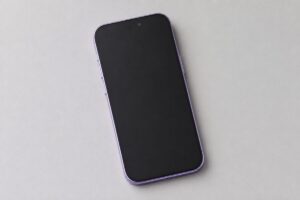
Externally, the iPhone 17 doesn’t look drastically different from the 16. The edge is smart brushed metal, contrasting with the glossy front glass and milky matte rear, with the camera module matching the body color in a slightly darker, translucent material. Apple’s design language is deliberately iterative, and this year is no exception.
What did change is the front glass. The iPhone 17 features Ceramic Shield 2, offering three times better scratch resistance than previous models. That’s a real-world improvement you’ll appreciate over months of pocket use, especially if you skip the screen protector.
The display is where things get properly exciting, because the 6.3-inch OLED ProMotion panel used on the iPhone 17 Pro is the exact same screen as on the standard model, Always-On included. That means the display drops to 1Hz when idle to preserve battery, True Tone adjusts white balance automatically, and peak brightness hits 3,000 nits. Last year, ProMotion and Always-On were Pro exclusives. Now they’re just on the regular phone. What tends to surprise people is how noticeable ProMotion feels day to day. Scrolling looks different. Smoother, more immediate, and harder to go back from once you’ve used it.
One thing worth flagging: 3,000 nits is a significant jump from the 2,000 nits on the iPhone 16, and outdoor visibility is genuinely better as a result, though reflections in direct sunshine remain an issue despite the new anti-reflective coating.
iPhone 17 Review: A19 Chip and Day-to-Day Performance
The iPhone 17 runs on Apple’s A19 chip, built on an upgraded 3-nanometer process. It has a 6-core CPU (two performance cores, four efficiency cores), a 5-core GPU, an updated display engine, a new image signal processor, and a 16-core Apple Neural Engine.
The A19 Pro in the Pro models has more headroom for graphics-heavy tasks, but the gap between the two chips rarely shows up in daily use. Messaging, browsing, social media, and even moderately demanding apps all run identically across both. Where the Pro chip eventually pulls ahead is sustained gaming or long video editing sessions, and most iPhone 17 buyers won’t push it that hard on a regular basis.
Apple also introduced the N1, a new in-house wireless networking chip with Wi-Fi 7, Bluetooth 6, and Thread support, improving reliability for Personal Hotspot and AirDrop. Faster networking in a phone that already performs well on 5G is a quiet but real upgrade. It’s the kind of improvement you only notice when you switch back to an older device.
The iPhone 17 fully supports Apple Intelligence, Apple’s on-device AI suite covering Visual Intelligence, Writing Tools, and Live Translation, without the hardware limitations that held back older devices. If you’re curious how Apple’s AI strategy stacks up against rivals, our Claude vs ChatGPT breakdown is worth a look.
Battery Life: A Genuine Leap Forward
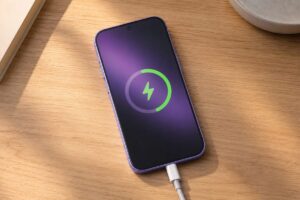
Apple rates the iPhone 17 at up to 30 hours of video playback, eight hours more than the iPhone 16. Fast charging gets to 50% in 20 minutes with a 40W adapter or higher.
Real-world results back that up. One reviewer logged 33 hours of total battery life across a typical day of WhatsApp, social media, navigation, and music playback, finally hitting the red zone only after extended use that pushed into a second day. That’s not an outlier result either. Multiple reviewers landed in similar territory, which tells you something about how much the battery improved over the 16.
The Always-On display doesn’t appear to hurt endurance at all, thanks to that 1Hz low-power state. And the rapid charging is genuinely useful in practice. Getting to 50% in 20 minutes matters when you’re walking out the door at 30%. Pairing a phone like this with the right best productivity apps can stretch battery life even further by cutting down on background drain.
Camera System: What’s New and What’s Missing
The iPhone 17 has two 48-megapixel rear cameras: a 48MP Wide (Fusion) lens and a 48MP Ultra Wide, upgraded from the 12MP Ultra Wide on the iPhone 16. The Fusion lens covers 0.5×, 1×, and 2× zoom.
The ultra-wide jump from 12MP to 48MP is the real story on the back of this phone. Architecture shots, wide landscapes, and tight interior spaces all benefit noticeably from that resolution increase. Ultra Wide photos are now 24MP by default, which Apple describes as the sweet spot for quality versus file size, and in practice it’s a sensible default.
What you don’t get is a dedicated telephoto. The 2× optical-quality zoom from the Fusion lens handles close-cropped portraits reasonably well, but it can’t touch the dedicated telephoto cameras on the Pro lineup. For most people shooting everyday life—food, travel, kids—this dual-camera setup is more than enough. But if you’re regularly shooting subjects at any real distyou’ll find the missing telephoto frustrating later. For a sense of what dedicated imaging hardware looks like at the other end of the spectrum, our Leica Q3 review is a useful contrast.
On the front, the iPhone 17 has a new 18-megapixel camera with Center Stage support, letting you shoot portrait and landscape selfies without rotating the phone. Dual Capture records 4K Dolby Vision from both cameras simultaneously, which opens up reaction-style videos without needing a second device.
You can read a full breakdown of iPhone 17 camera comparisons across the lineup at MacRumors.
iPhone 17 Review: Pros and Cons
What works well:
- ProMotion 120Hz and Always-On display at the standard tier (finally)
- Excellent battery life, meaningfully better than the iPhone 16
- 48MP Ultra Wide camera is a real upgrade, not a token one
- 256GB base storage with no price increase
- Ceramic Shield 2 improves durability where it matters
- The new 18MP Center Stage front camera adds genuine versatility
Where Apple held back:
- No dedicated telephoto, still limited to 2× digital crop
- USB 2.0 speeds (480 Mbps) remain frustratingly slow for data transfers
- Apple Intelligence features still feel unfinished and inconsistently useful
- No major design change from the iPhone 16 exterior
iPhone 17 Review: Should You Upgrade?
iPhone 16 owners can probably sit this one out. The display, selfie camera, and battery improvements are real, but they’re not the kind of thing that justifies a $799 outlay if you bought the 16 twelve months ago. iPhone 15 owners are in a different position. They’d be gaining the Action button, camera control, ProMotion, and a significantly improved camera stack, which is a meaningful generational jump.
Anyone upgrading from an iPhone 13 or older is looking at a substantial improvement across every metric. No caveats needed there.
The iPhone 17 also makes sense if you’ve been eyeing the Pro but can’t stomach the $300 premium. The iPhone Air requires compromises on battery and camera. The iPhone 17 Pro costs an extra $300. So for most people, the standard iPhone 17 is the clearest value play in Apple’s 2025 lineup, and in my experience, most buyers who go hands-on with both end up asking themselves what the Pro actually adds for their daily use. Often the answer is “not that much.” If you’re also shopping across device categories, our Lenovo IdeaPad Slim 5 review is worth reading alongside this.
For benchmark data on display, battery, and camera measurements across the full lineup, GSMArena’s detailed iPhone 17 lab tests are thorough and worth bookmarking.
iPhone 17 Review: Frequently Asked Questions
What is the starting price of the iPhone 17? The iPhone 17 starts at $799 for 256GB, with a 512GB option at $999.
Does the iPhone 17 have ProMotion? Yes. The 6.3-inch OLED display includes 120Hz ProMotion and always-on support, the same panel used in the iPhone 17 Pro.
Does the iPhone 17 have a telephoto lens? No. It has a dual-lens system with a 48MP wide and a 48MP ultra-wide, with a 2× optical-quality zoom from the Fusion lens but no dedicated telephoto. If you want context on how optical systems differ, the film camera breakdown covers it well.
How long does the iPhone 17 battery last? Apple rates it at up to 30 hours of video playback, eight hours more than the iPhone 16. Real-world results from multiple reviewers confirm it comfortably outlasts a full day of heavy use.
Is the iPhone 17 worth buying over the iPhone 17 Pro? For most users, yes. It shares the same display panel as the Pro, delivers excellent battery life, and handles everything the average person needs at $300 less. Students and everyday buyers looking for the best gadgets will find the iPhone 17 near the top of most shortlists.